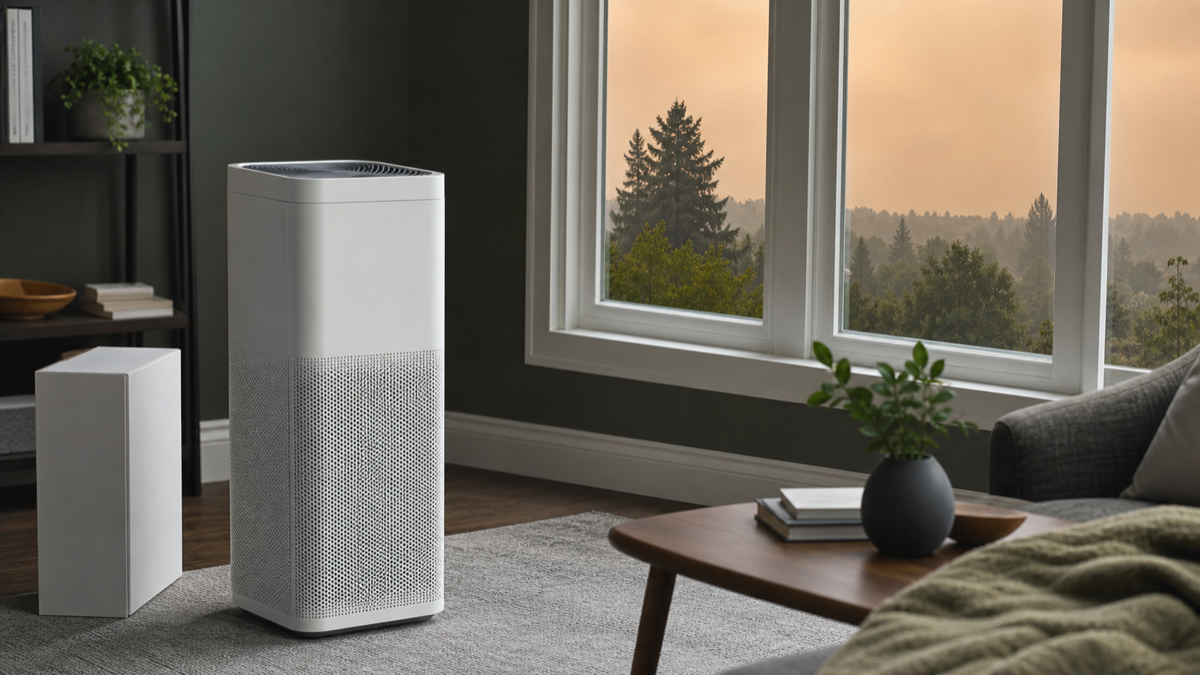
The Blueair Blue Pure 211i Max is our current research-led pick for wildfire smoke in a large room. Blueair publishes a 435 CFM smoke CADR and a 674-square-foot rating at 4.8 air changes per hour. That provides more particle-cleaning headroom than the other commercial models in this guide, while its 23 to 53 dB published range makes continuous use more practical.
Size the purifier to one cleaner-air room before trying to clean an entire home. EPA says smoke CADR should be at least two-thirds of the room area in square feet for an eight-foot ceiling; for frequent heavy smoke, it notes AHAM's more conservative recommendation to choose a smoke CADR equal to room area. Higher ceilings require more capacity.
Wildfire smoke picks at a glance
| Pick | Published smoke CADR | Room at 2/3 rule | Conservative room | Best use |
|---|---|---|---|---|
| Blueair Blue Pure 211i Max | 435 CFM | Up to about 652 sq. ft. | About 435 sq. ft. | Large cleaner-air room |
| Coway Airmega 400S | 328 CFM | Up to about 492 sq. ft. | About 328 sq. ft. | Premium dual-filter design |
| Levoit Vital 200S-P | 250 CFM | Up to about 375 sq. ft. | About 250 sq. ft. | Medium room value |
| Coway Airmega Mighty | 233 CFM | Up to about 349 sq. ft. | About 233 sq. ft. | Bedroom or office |
| Corsi-Rosenthal box | EPA measured 401 +/- 31 CFM for one four-filter design | Varies by build | Varies by build | Temporary DIY alternative |
The two room columns are calculations, not manufacturer claims. The 2/3 rule divides smoke CADR by 0.67; the conservative column matches smoke CADR to equal room area. Both assume an eight-foot ceiling.
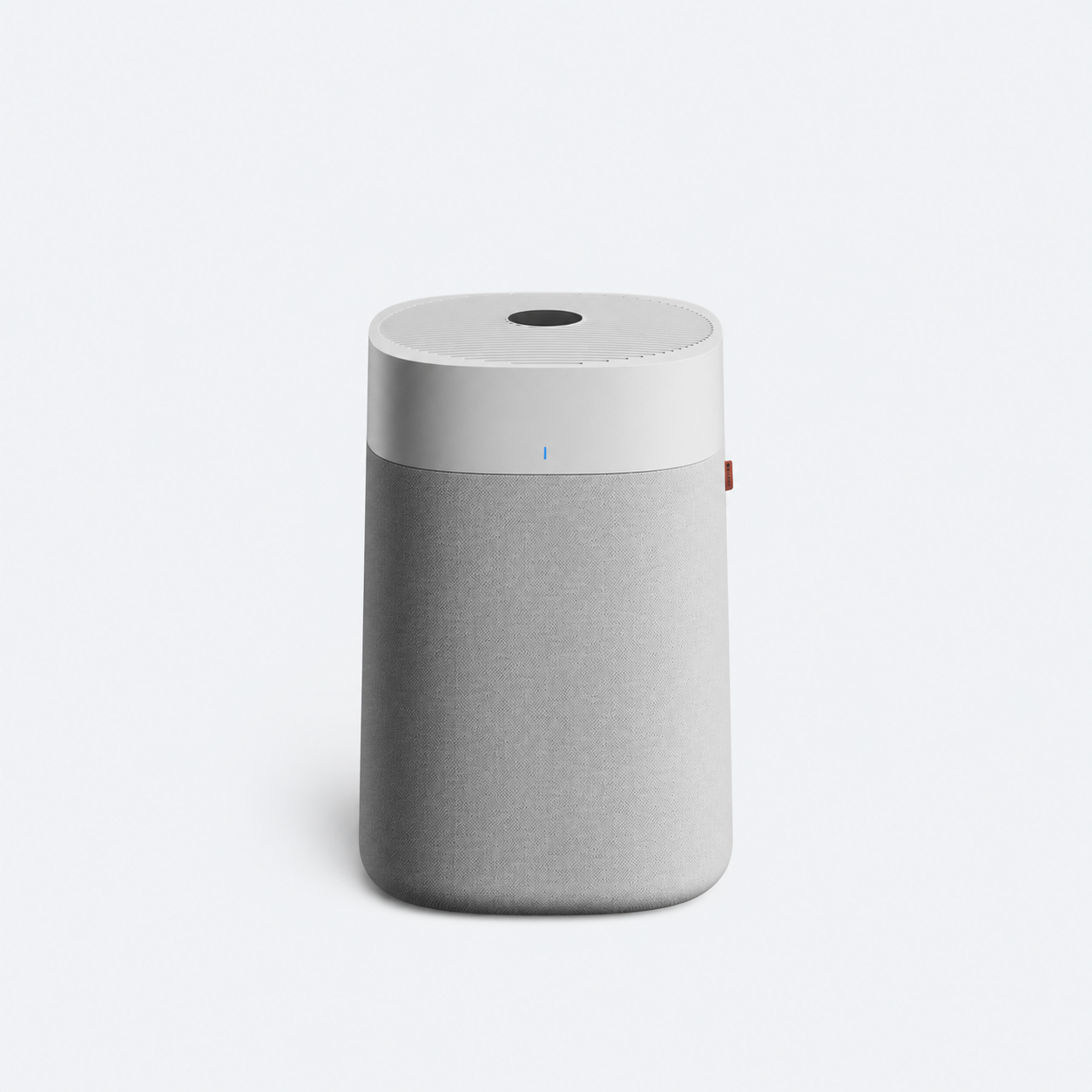
Blueair Blue Pure 211i Max
The 211i Max leads this group on published smoke CADR at 435 CFM. Blueair rates it for 674 square feet at 4.8 ACH, while RTINGS measured 419 CFM at maximum and 224 CFM at its quieter speed 2. The standard carbon layer is supplemental: this is a strong particle purifier, not a complete solution for wildfire gases.
Best fit: a large dedicated cleaner-air room with spare filters on hand
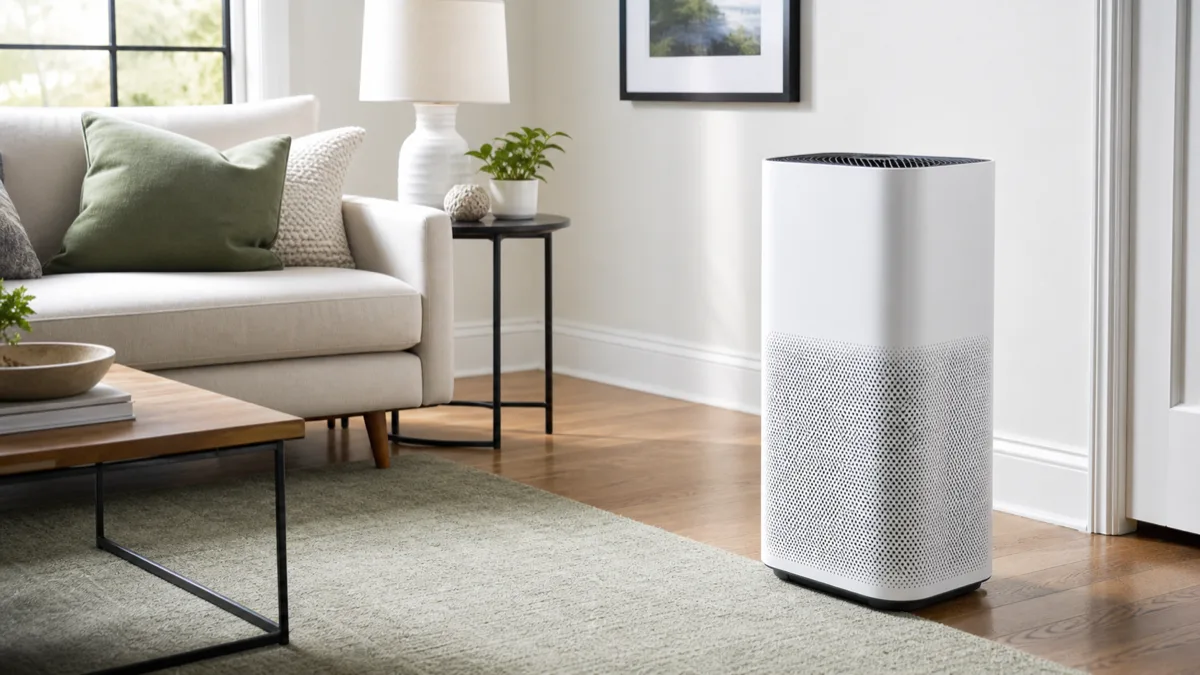
Coway Airmega 400S
Coway publishes a 328 CFM smoke CADR, two washable prefilters, and two Max2 filter sets that combine particle and activated-carbon media. The machine is large, heavy, and expensive compared with the value picks. Its more substantial dual-filter arrangement is the reason to consider it, not the oversized one- or two-ACH coverage headline.
Best fit: buyers prioritizing a larger carbon-and-particle filter assembly
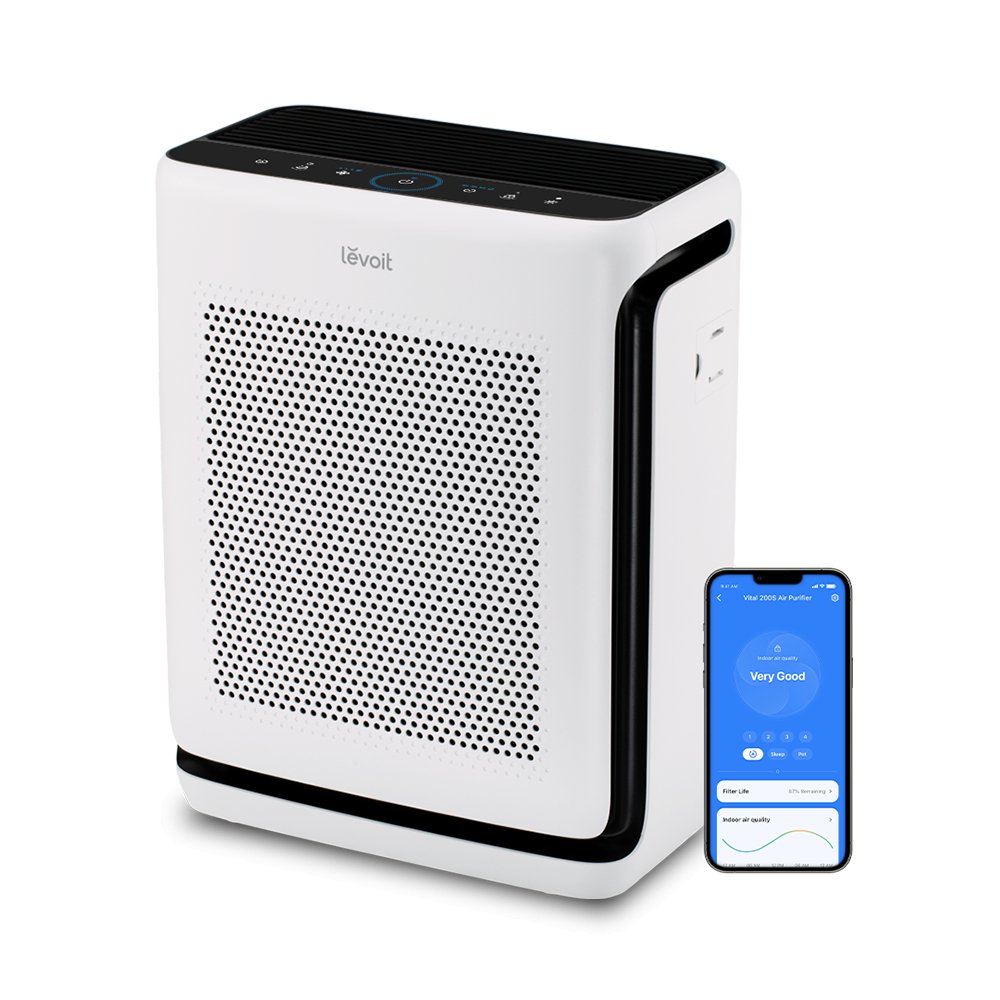
Levoit Vital 200S-P
The Vital 200S-P publishes 250 CFM CADR, enough for a conservative 250-square-foot cleaner-air room or about 375 square feet under EPA's minimum 2/3 rule. Its washable prefilter and app scheduling are practical, and the existing TestedHarbor Vital 200S-P review explains the difference between its 388-square-foot 4.8-ACH rating and much larger one-ACH headline.
Best fit: medium bedrooms and living rooms
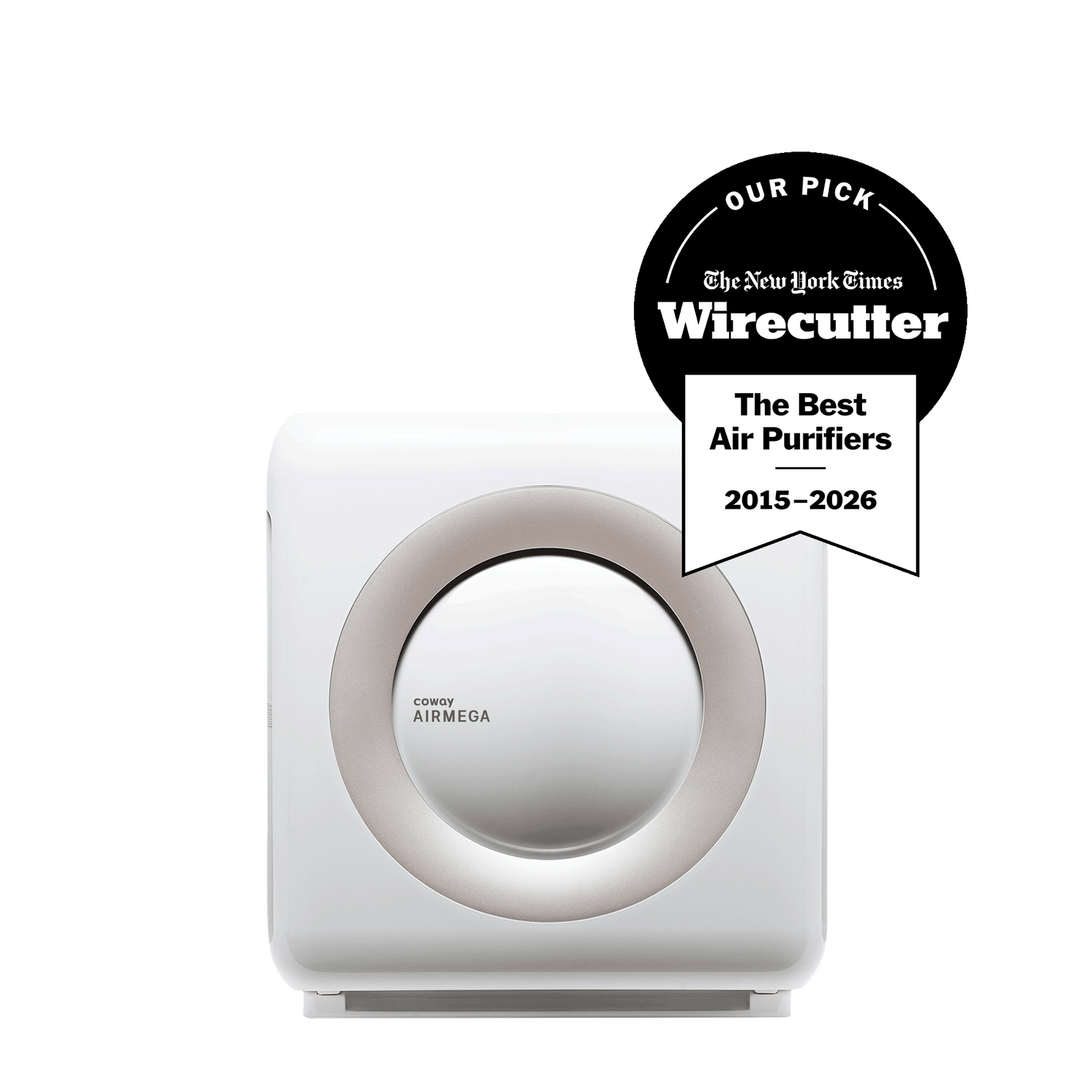
Coway Airmega AP-1512HH Mighty
The Mighty's 233 CFM smoke CADR supports a bedroom-sized cleaner-air room. Replacement filters are widely established and the physical controls work without an account. Coway lists a bipolar device in the filtration design, so buyers who want a strictly non-ionizing model should choose another option or verify current controls and certification.
Best fit: a closed bedroom or office used as the cleaner-air room
Budget fallback: a Corsi-Rosenthal box
EPA chamber research measured 401 +/- 31 CFM wildfire-smoke CADR from one four-filter Corsi-Rosenthal design using MERV 13 filters and a shroud. That result shows why a well-built unit can be useful when commercial purifiers are unavailable or unaffordable. It does not mean every DIY build will deliver the same performance.
Fan, filter thickness, number of filters, shroud, seal quality, assembly, and maintenance all change output. EPA generally prefers a commercial purifier with known CADR because it is easier to size reliably, and treats DIY units as an alternative rather than a permanent replacement for known-performance products.
How to set up a cleaner-air room
- Choose a room large enough for the household to spend time comfortably, ideally with doors and windows that close.
- Measure floor area and ceiling height, then size the purifier from smoke CADR rather than the largest marketing coverage number.
- Buy the purifier and spare filters before smoke arrives; regional stock can disappear during an event.
- Close windows and doors when outdoor air is smoky and avoid indoor particle sources such as frying, candles, smoking, and vacuuming without effective filtration.
- Run the purifier continuously and use the highest tolerable fan setting. Check the filter more frequently than normal.
- If central HVAC is available, ask a qualified professional whether the system can support MERV 13 or higher and whether continuous fan operation is appropriate.
Particles are not the whole smoke problem
Smoke CADR represents small-particle removal and is the most useful standardized shopping number for PM2.5. Wildfire smoke can also contain gases. EPA notes that activated carbon can filter gases when enough material is present, but there is no widely used CADR-like rating for gas removal. Avoid claims that a thin carbon layer makes indoor smoke harmless.
An air purifier reduces exposure; it does not guarantee safety during severe smoke. Follow local air-quality alerts and public-health guidance. People at higher risk should make a response plan with a healthcare professional before wildfire season.
Frequently asked questions
What CADR do I need for wildfire smoke?
EPA says the tobacco-smoke CADR should be at least two-thirds of room area in square feet, assuming an eight-foot ceiling. For frequent heavy smoke, AHAM recommends a more conservative smoke CADR equal to the room area.
Does a HEPA air purifier remove wildfire smoke?
A properly sized particle-filter air purifier can reduce airborne smoke particles such as PM2.5. It cannot remove every gas in wildfire smoke, and carbon performance depends on how much sorbent the filter contains.
Can a DIY air cleaner help with wildfire smoke?
EPA research found that well-built box-fan filters and Corsi-Rosenthal designs can reduce smoke particles, but performance varies by fan, filter, shroud, construction, and maintenance. A commercial purifier with known CADR is easier to size reliably.
 Best for Bedrooms