Review basis: Research-led; not hands-on. We checked Blueair's current US specifications and manual, independent lab testing updated in July 2026, and the current retailer listing. See our evidence standards and the sources at the end of this review.
The Blueair Blue Pure 211i Max is built for a job that smaller purifiers cannot do efficiently: move enough filtered air for a large living room, open floor plan, or cleaner-air room during a smoke event. Blueair publishes 435 CFM smoke CADR and a 674-square-foot rating at 4.8 air changes per hour. Independent testing measured almost the same maximum capacity.
That performance comes with real tradeoffs. The 211i Max is a 16.2-pound floor appliance with no wheels, maximum speed is much louder than the published range may suggest in a real room, and HEPASilent uses an electrostatic stage that cannot be switched off. It is a strong particle purifier, not a universal solution for gases and odors.
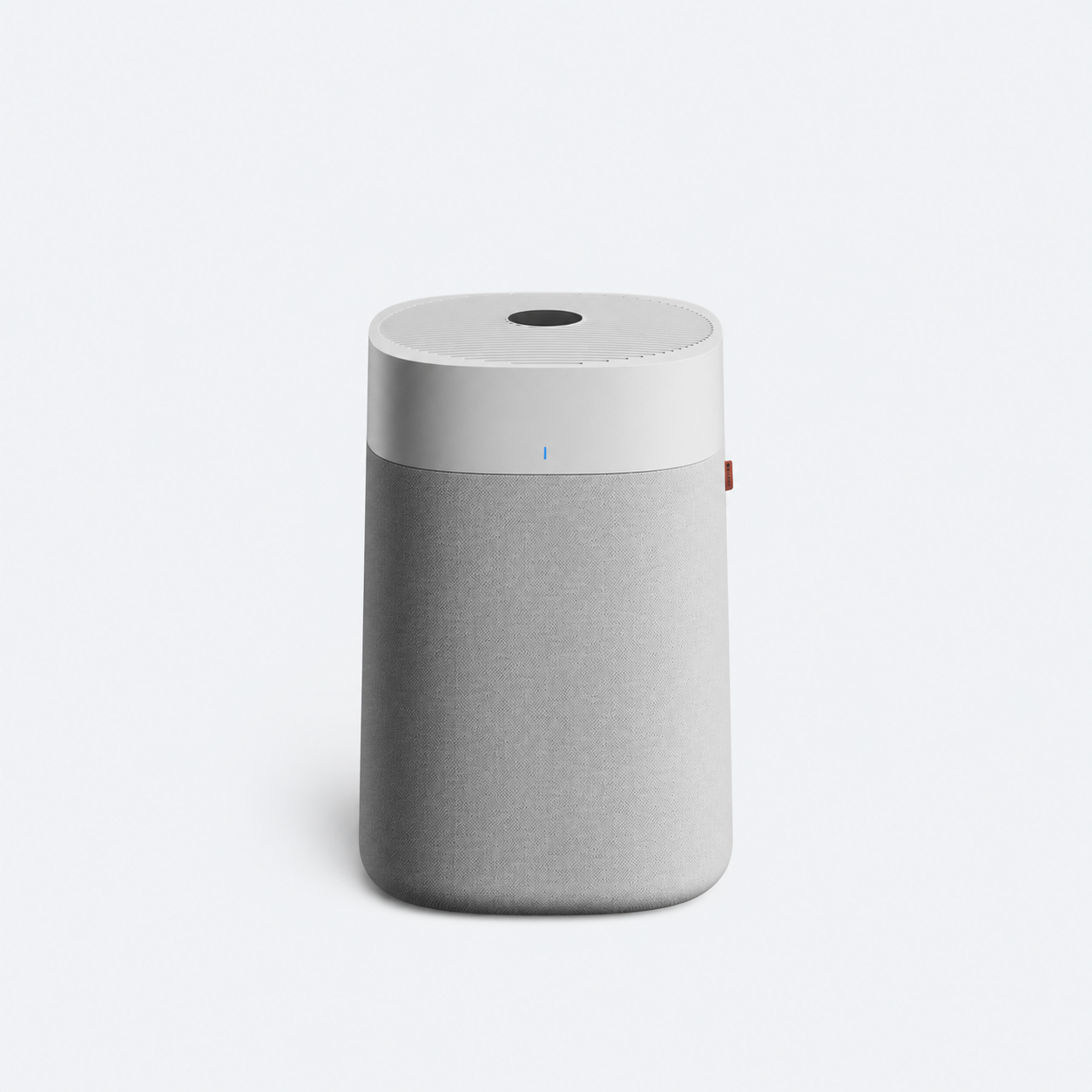
Quick verdict
The Blue Pure 211i Max is our research-led large-room pick when high particle CADR and useful airflow at a quieter setting matter more than compact size or mechanical-only filtration.
RTINGS measured 419 CFM PM1.0 CADR at maximum and 224 CFM at speed 2 under its 45 dBA test threshold. That second figure matters: it means the purifier can still serve roughly a 350-square-foot room without running at its loudest setting.
Choose the smaller Blueair 311i Max when the room is below about 439 sq. ft. Choose the Levoit Vital 200S-P when you want a washable front prefilter, a pet-focused intake, and no listed electrostatic stage.
Blueair 211i Max key specs
Pros
- Very high published and independently measured particle CADR.
- Retains useful large-bedroom or medium-room airflow at a quieter speed.
- PM1, PM2.5, and PM10 readings are available on the appliance.
- Auto mode, schedules, app control, and smart-home integration.
- Washable exterior prefilter is easy to inspect and clean.
Cons
- Maximum speed is clearly audible in independent testing.
- Large 14.4-inch footprint, 16.2-pound weight, and no wheels.
- HEPASilent's electrostatic stage cannot be disabled.
- Standard carbon sheet is limited for gases and strong odors.
- Large proprietary replacement filters increase ownership cost.
Large-room air cleaning performance
Blueair publishes smoke, dust, and pollen CADRs of 435, 452, and 450 CFM. Those figures support a 674-square-foot room at 4.8 air changes per hour, which is the useful rating to compare with other purifiers. The much larger one-air-change figure on retailer pages describes slow dilution, not repeated cleaning for smoke, allergies, or an active pollution source.
RTINGS measured 419 CFM PM1.0 CADR and calculated a 654-square-foot room at maximum speed. The close agreement with Blueair's official smoke CADR gives more confidence than a manufacturer claim alone. At speed 2, RTINGS measured 224 CFM under its 45 dBA threshold, enough for its calculated 350-square-foot room.
That quiet-speed result is the strongest reason to choose this model over an undersized purifier. A small unit may look quieter on paper, but it can require maximum speed to move enough air. The 211i Max has more headroom after the initial particle load is under control.
How large a room can it actually handle?
Use 674 sq. ft. as the upper official reference for frequent cleaning with an eight-foot ceiling. For a 400- to 600-square-foot closed living room, the purifier has useful capacity for normal particle loads and can run below maximum after a pollution event clears.
Open plans need more caution. Measure the entire connected volume, including the kitchen, dining area, hall, stairwell, and higher ceilings. Air moving to other parts of the home reduces the number of effective air changes in the space you care about.
For wildfire smoke, EPA guidance treats one cleaner-air room as the practical target. Keep windows and doors closed when conditions require it, reduce indoor particle sources, and choose a smoke CADR that fits the room rather than trying to clean an entire leaky house with one portable unit.
Wildfire smoke: strong for particles, limited for gases
A 435 CFM smoke CADR makes the 211i Max the strongest commercial model in our current wildfire-smoke guide. It can reduce PM2.5 and other smoke particles quickly in a correctly sized cleaner-air room.
The standard Particle + Carbon filter uses a carbon layer intended for light household odors. It does not contain the deep sorbent bed required for comprehensive gas removal. Blueair also sells other filter variants, but product names and included filters can change, so verify exactly which filter is in the bundle rather than assuming every 211i Max has the same carbon capacity.
No portable particle purifier removes every wildfire gas. Follow local health guidance, control outdoor-air entry where practical, and replace filters sooner when a severe smoke season loads them heavily.
Noise and quiet-speed performance
Blueair publishes 23 to 53 dB. RTINGS measured 33.9 dBA at the lowest setting and 58.7 dBA at maximum. Different rooms and measurement distances produce different numbers, but the independent result makes the tradeoff clear: maximum speed is for rapid cleanup, not unobtrusive background use.
More important, RTINGS measured 224 CFM at speed 2 while keeping the test under 45 dBA. That is enough airflow for many large bedrooms and medium living rooms. A practical routine is to use maximum speed before occupying the room or during a smoke spike, then step down once the air clears.
Filter design, electrostatic stage, and maintenance
The washable fabric prefilter wraps around the intake and catches larger dust, lint, and hair. Behind it is a combined particle and carbon filter. Blueair calls the full system HEPASilent because it combines mechanical media with electrostatic particle charging.
The electrostatic component cannot be switched off independently. RTINGS reports that the physical filter itself is not HEPA-certified under its current test method. Buyers who specifically want a certified HEPA filter or mechanical-only filtration should choose on that requirement rather than the HEPASilent name.
Blueair says the main filter can last up to nine months, with RealTrack estimating life from use and pollution. Vacuum and wash the outer prefilter as directed, and budget for the correct 211i Max replacement filter before buying the appliance.
Sensors, display, app, and controls
The appliance provides touch controls for power, fan speed, Auto, and Night modes. It can display PM1, PM2.5, or PM10 readings, and the color indicator provides a quick air-quality status. Auto mode adjusts speed from the integrated particle sensors.
The Blueair app adds remote control, schedules, timers, outdoor air-quality information, and filter tracking. The main fan controls remain usable without the app, but schedules and remote features depend on Wi-Fi and an account.
Particle sensors do not measure every odor or gas. Use manual high speed after known cooking or smoke events even if the display has not reacted as strongly as expected.
Blueair 211i Max alternatives
| Model | Choose it when | Main tradeoff |
|---|---|---|
| Blueair 211i Max | You need the highest particle CADR in this group for a large room or smoke event. | Large body, louder maximum speed, proprietary filter, and a fixed electrostatic stage. |
| Blueair 311i Max | Your room is below about 439 sq. ft. and you want a lighter, smaller Blueair. | Lower smoke CADR and less large-room headroom. |
| Levoit Vital 200S-P | You have pets, want a washable front prefilter, and prefer no listed electrostatic stage. | 250 CFM is a clear step down for large rooms. |
| Levoit Core 200S-P | You only need a compact purifier for a small closed bedroom or office. | 90 CFM is not suitable for a large living room or smoke-cleaner room. |
Who should buy the Blueair 211i Max?
- People sizing one purifier for a closed large living room or open space with measured boundaries.
- Homes that need high particle CADR during wildfire-smoke or heavy pollen events.
- Buyers who want useful airflow at a quieter mid-level fan speed.
- Households that value PM readings, automatic adjustment, schedules, and remote control.
- Pet homes where a washable fabric prefilter simplifies hair and dust maintenance.
Who should skip it?
- Buyers who require certified HEPA media or mechanical-only filtration.
- Anyone expecting the standard carbon layer to solve heavy gases, VOCs, or persistent odors.
- Small bedrooms where 435 CFM and a 14.4-inch footprint are unnecessary.
- People who need wheels or frequently move a 16.2-pound purifier between floors.
- Buyers unwilling to budget for the larger proprietary replacement filter.
Frequently asked questions
What room size is the Blueair 211i Max best for?
Blueair rates it for 674 square feet at 4.8 air changes per hour. RTINGS measured 419 CFM PM1.0 CADR and calculated a similar 654-square-foot maximum-speed room size, so this is a genuine large-room model.
Is the Blueair 211i Max good for wildfire smoke?
Its 435 CFM published smoke CADR gives it strong capacity for reducing wildfire smoke particles in a correctly sized room. The standard carbon layer is limited, so it should not be treated as a complete solution for wildfire gases or strong odors.
Is the Blueair 211i Max quiet?
Blueair publishes a 23 to 53 dB range. RTINGS measured 33.9 dBA on the lowest setting and 58.7 dBA at maximum, while measuring 224 CFM at a quieter speed 2. High speed is powerful but clearly audible.
Can the Blueair 211i Max electrostatic filtration be turned off?
No. Blueair's HEPASilent system combines mechanical filtration with electrostatic particle charging, and the electrostatic component cannot be disabled independently.
How often does the Blueair 211i Max filter need replacement?
Blueair says the main filter can last up to nine months. Real life depends on fan speed, operating time, and pollution load, while the external fabric prefilter can be vacuumed and washed.
Choose capacity for the actual room
The 211i Max earns its place in a large room. For a medium room, the smaller 311i Max provides enough airflow with a lower ownership burden.
See all best air purifier picks | Compare wildfire-smoke picks | Compare pet-home picks
How we evaluated the Blueair 211i Max
This is a research-led review based on current manufacturer specifications, the official user manual, independent comparative testing, room-size calculations, EPA smoke guidance, and current retailer information. TestedHarbor has not tested this unit hands-on, so all independent measurements are attributed.
Sources checked
- Blueair: Blue Pure 211i Max specifications, room size, filters, sensors, and controls
- Blueair: Blue Pure 211i Max user manual
- RTINGS: independent maximum and low-noise CADR, noise, dimensions, controls, and filter analysis
- US EPA: Preparing for Smoke and Heat
- Amazon US: current model, seller, bundle, and availability check
Product image source: Blueair's official US product page. The third-party award badge in the source image was removed to avoid implying a product-specific endorsement; the purifier itself was preserved.