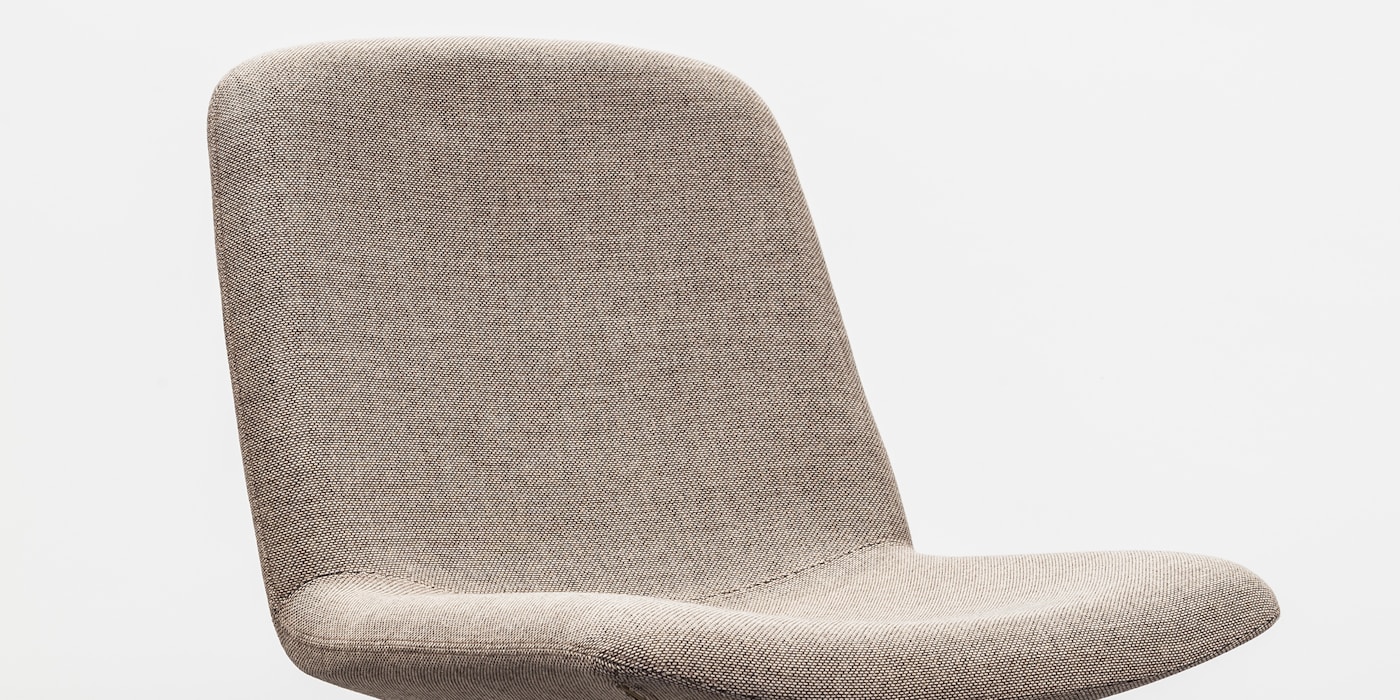
Our research-led overall pick is the Steelcase Leap. Its adjustable seat depth, 4D arms, lumbar position, lower-back firmness, and controlled recline solve more common fit problems than chairs built around one dramatic feature. The Branch Ergonomic Chair Pro is the value choice for most home offices, while the Herman Miller Aeron is the premium full-mesh option when you can select the correct size.
If your pre-tax budget cannot exceed $500, use our separate best office chairs under $500 guide. That page compares a narrower budget set instead of mixing discounted midrange chairs with four-figure models.
No chair is universally comfortable. A deep seat can support a tall user's thighs and press behind a shorter user's knees. Lumbar support can feel precise to one person and intrusive to another. We therefore rank these chairs by fit range, meaningful adjustments, documented specifications, warranty and repair confidence, return risk, current US availability, and independently reported tradeoffs - not an invented comfort score.
The top 10 at a glance
| Pick | Best for | Seat and back | Most useful fit controls | Warranty | Check before buying |
|---|---|---|---|---|---|
| Steelcase Leap | Best overall | Upholstered seat and back | Seat depth, 4D arms, lumbar position, lower-back firmness | 12 years on the current US store version | Premium price; seat feels firmer than its appearance suggests |
| Branch Ergonomic Chair Pro | Best value for most home offices | Cushioned seat; mesh or upholstered back options | Seat depth, 5D arms, two-way lumbar, forward tilt | 7 years | 275-pound capacity; direct-return fees may apply |
| Herman Miller Aeron | Best premium full-mesh chair | Suspension mesh seat and back | Three sizes, arm options, tilt limiter, optional PostureFit SL | 12 years, three shifts | Choose size A, B, or C before choosing finishes |
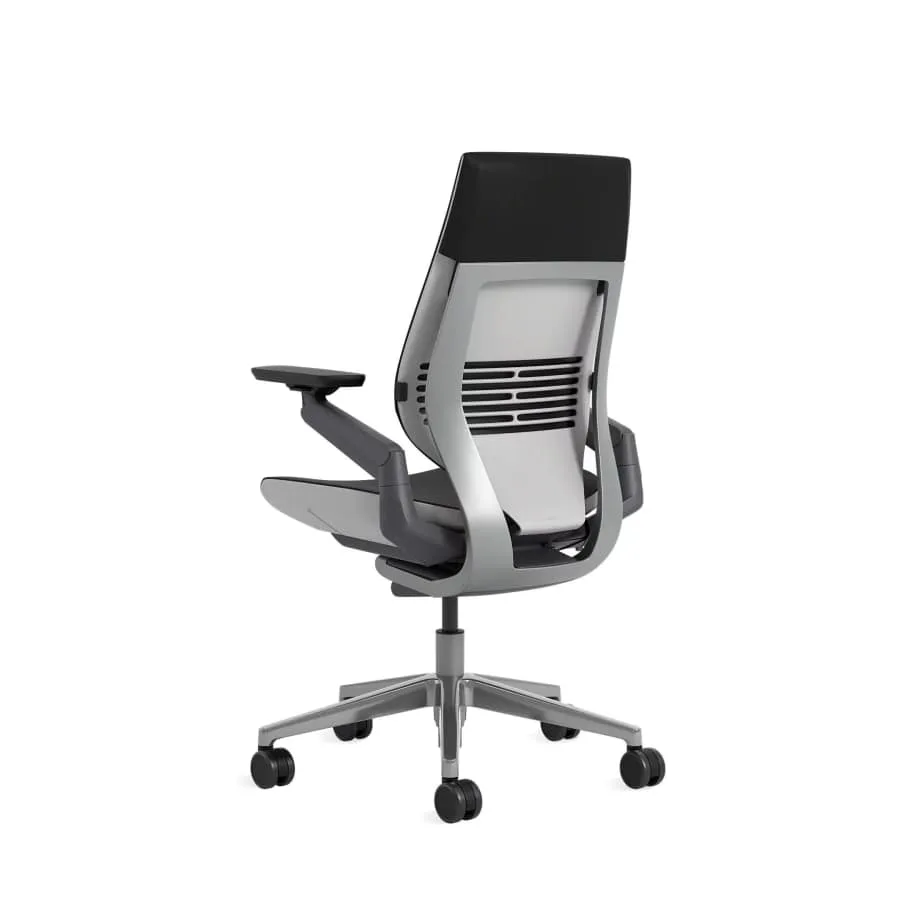
| Steelcase Gesture | Best armrests | Upholstered seat; shell or wrapped back | 360-degree arms, seat depth, back stops, optional headrest | 12 years on the current US store version | Less granular lumbar tuning than Leap |
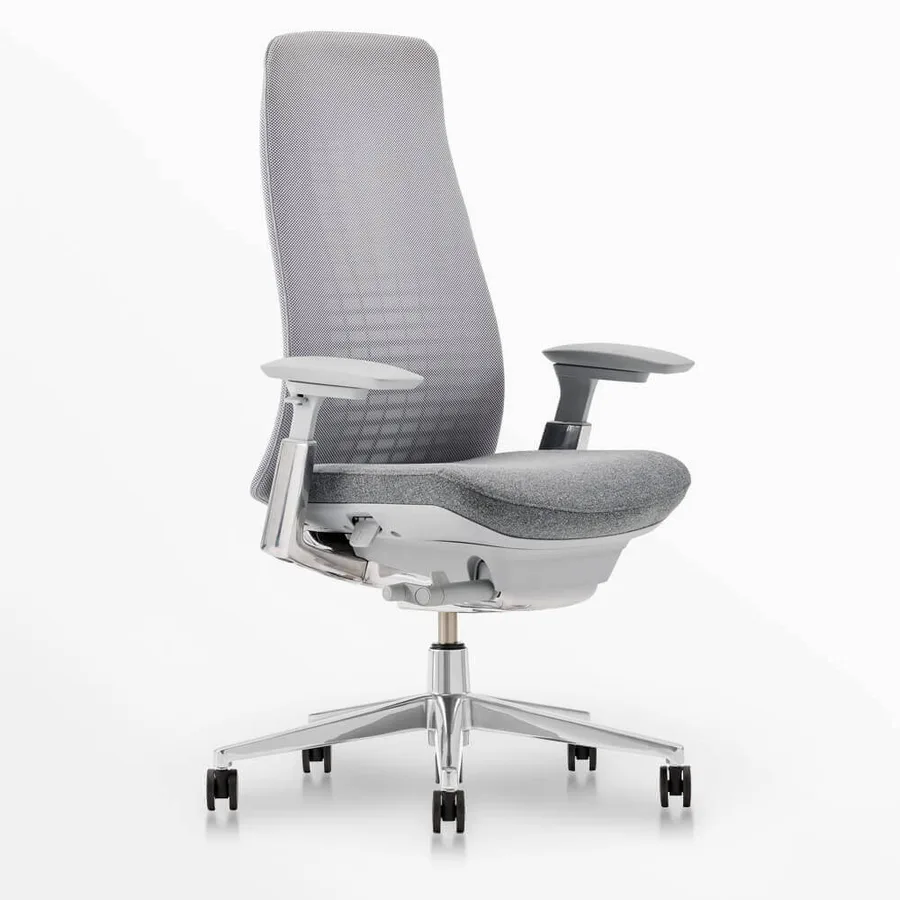
| Haworth Fern | Best flexible back | Cushioned seat; several back materials | Seat depth, back stops, optional 4D arms and forward tilt | 12 years | Lumbar and forward tilt can be optional |
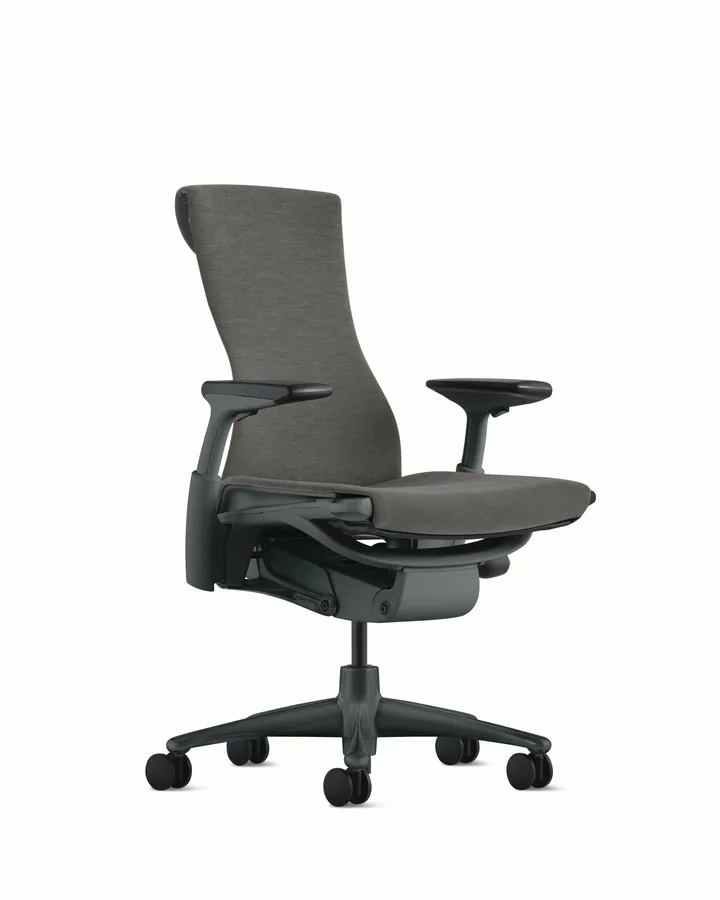
| Herman Miller Embody | Best pressure distribution | Four-layer seat and flexible pixelated back | Seat depth, Backfit, arm height and width, tilt limiter | 12 years | Very expensive; arms are less versatile than Gesture |
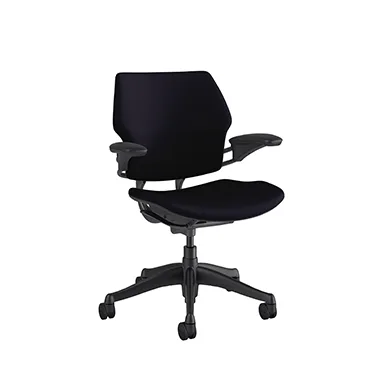
| Humanscale Freedom Task | Best self-adjusting recline | Contoured upholstered seat and back | Weight-sensitive recline, seat depth, back height, linked arms | 15 years on the cited US version | Fewer manual recline controls; configurations differ |
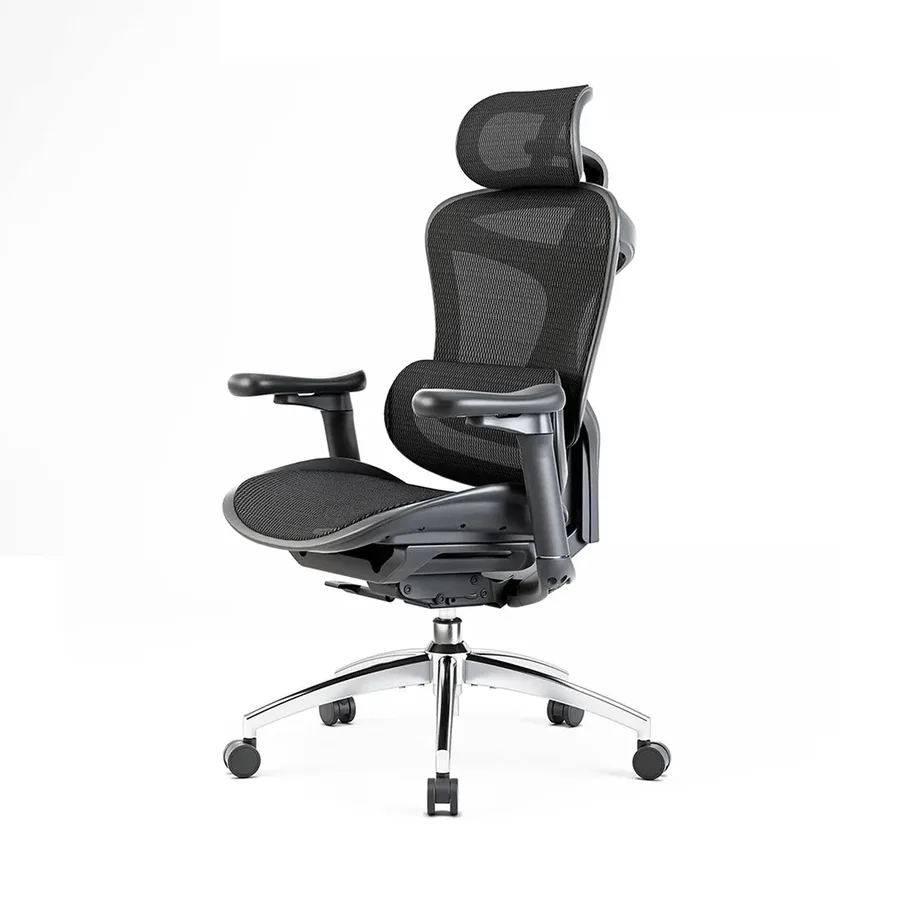
| SIHOO Doro C300 | Best full mesh under $500 | Mesh seat and back | Adaptive lumbar, back height, coordinated 4D arms | 3 years | Relatively narrow seat; lumbar is not manually positioned |
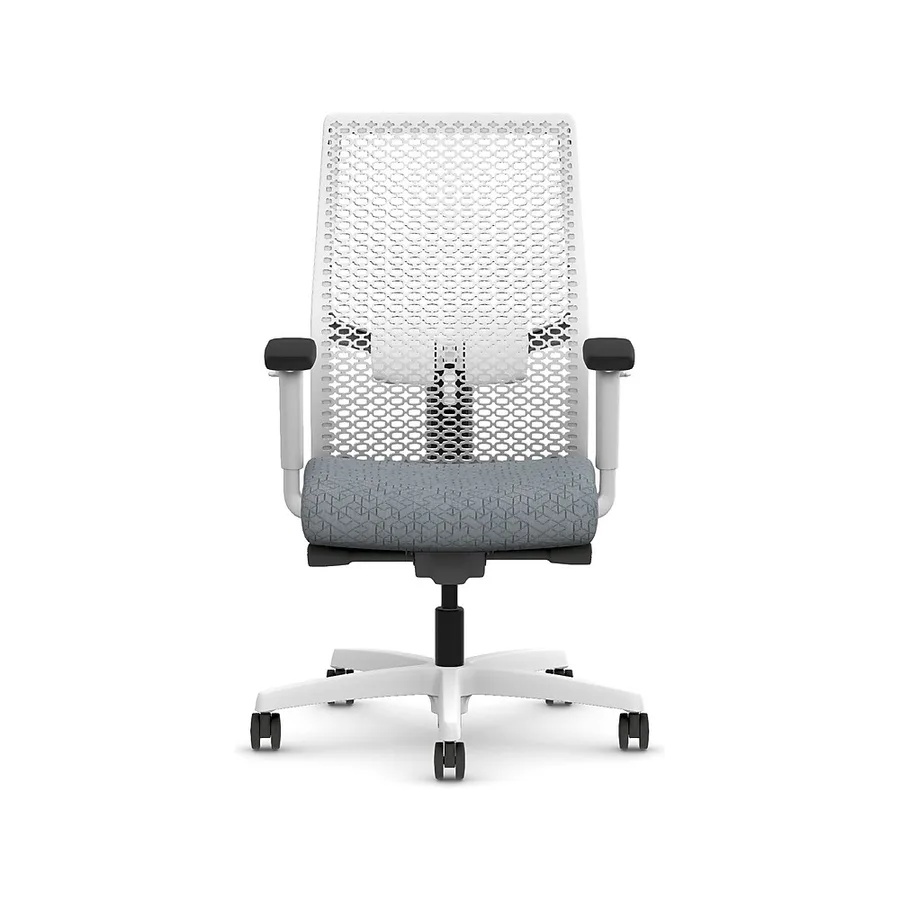
| HON Ignition 2.0 | Best configurable commercial chair | Varies by SKU | Seat slider, lumbar height, arm height and width on selected SKUs | Varies by SKU and use | Match the full model number to the controls you need |
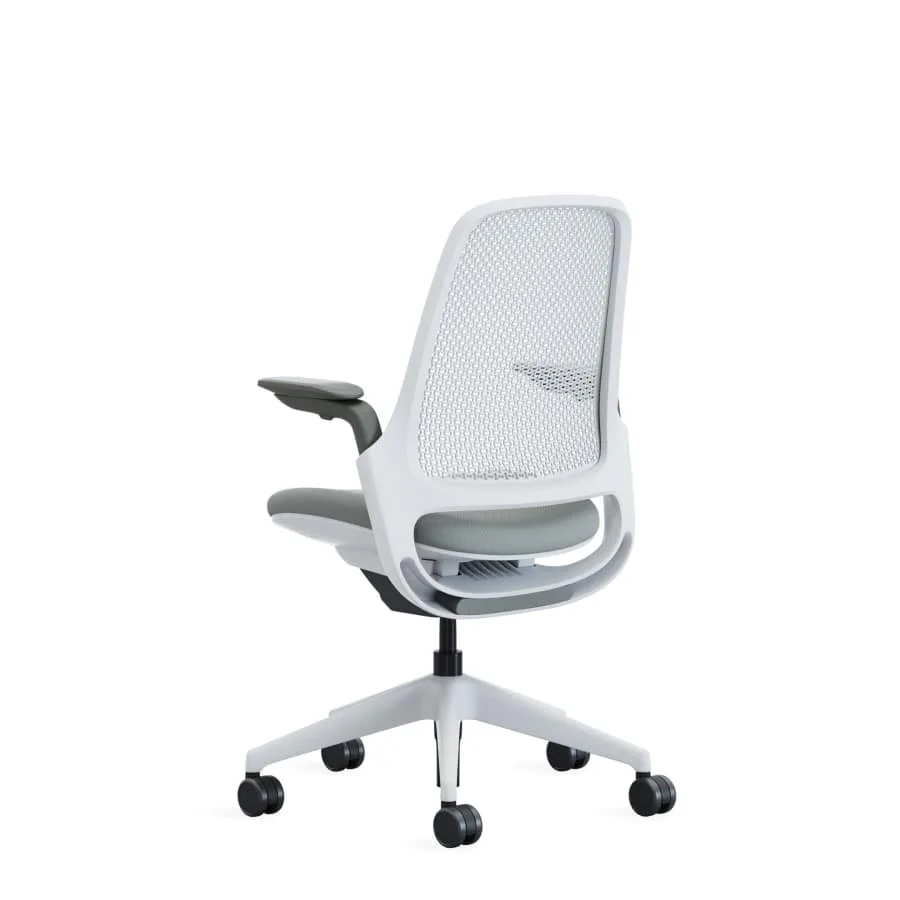
| Steelcase Series 1 | Best compact chair | Cushioned seat; Microknit or Air Back | Seat depth, arm and lumbar options, weight-activated recline | 12 years on the current US store version | Compact and practical rather than plush |
The best ergonomic office chairs
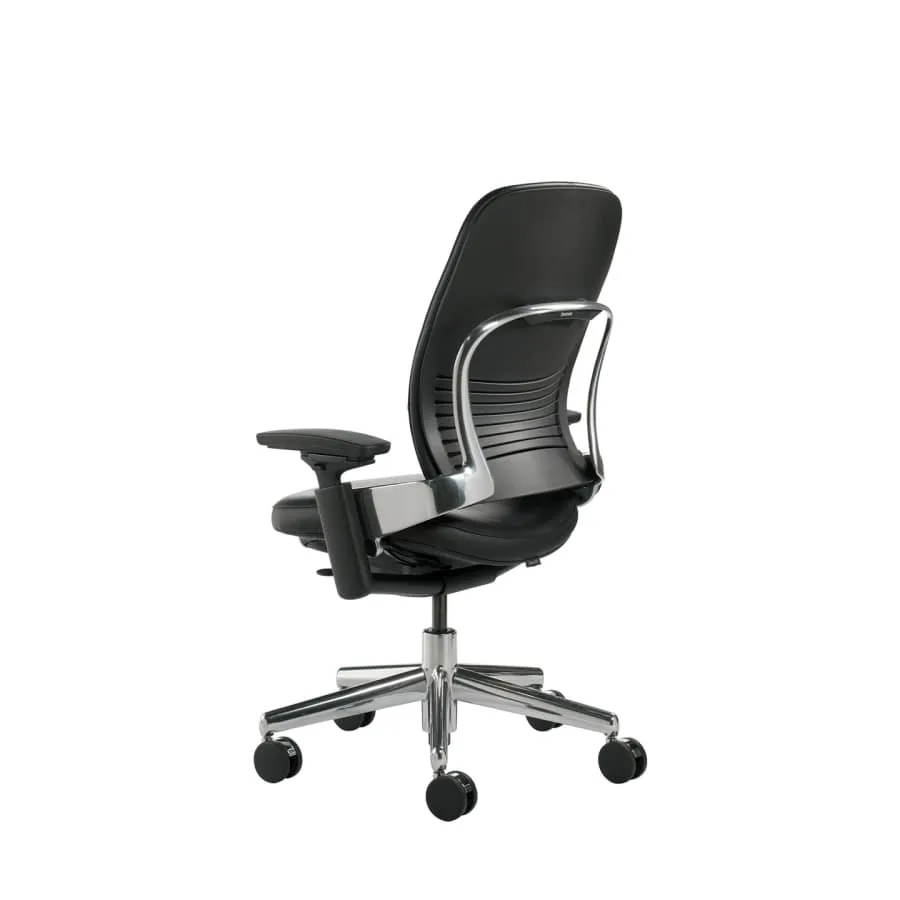
Steelcase Leap
Broad fit controls400-pound capacityLong US warrantyLeap earns the top position because its adjustments address actual geometry instead of adding isolated features. The seat slides for different leg lengths. The arms move in four directions. The lumbar support changes position, while a separate lower-back firmness control changes how assertively the backrest pushes. Four recline stops and a tension control let the user move without losing contact with the work surface.
Steelcase's LiveBack system is designed to flex as the spine changes shape through recline, and the seat edges flex to reduce pressure when posture shifts. The current chair supports up to 400 pounds. That does not guarantee a fit for every body, but it gives Leap a wider practical range than a fixed-depth chair with decorative lumbar padding.
Main tradeoff: the seat is supportive rather than plush, and the price is high. Leap is also frequently sold refurbished, so confirm whether you are buying new, remanufactured, or used and whose warranty applies.
Best fit: a full-time workstation where several people may use the chair or one buyer needs granular lower-back and seat-depth control.
Skip it when: you want a full-mesh seat, a built-in headrest, or a softer first impression.
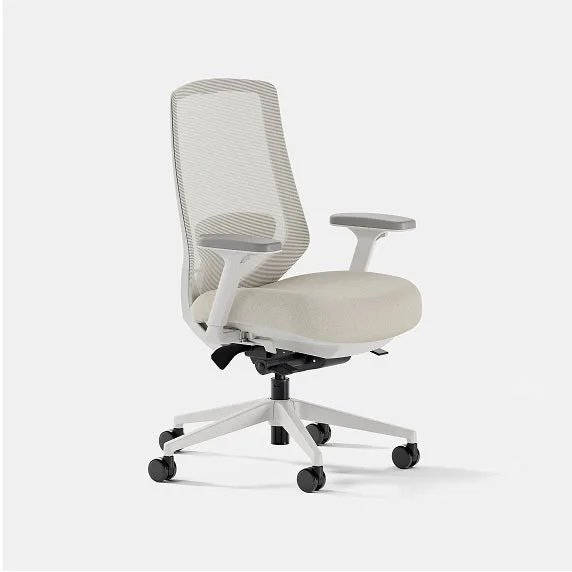
Branch Ergonomic Chair Pro
14 adjustment pointsOptional tall cylinderSeven-year warrantyThe Branch Pro packages the controls most buyers should prioritize into a chair that sits below the premium Steelcase, Herman Miller, and Haworth tier. Branch lists seat height and depth, 5D arms, a height- and depth-adjustable removable lumbar pad, forward tilt, recline tension, and an optional tall cylinder. Material choices include mesh, boucle, vegan leather, and leather around a high-density foam seat.
Its advantage is not that 14 is a magic number. It is that seat depth, arm width, lumbar placement, and forward tilt can change how the chair meets a person and desk. Those are more useful than a fixed headrest or a deep recline that cannot be tuned.
Main tradeoff: the 275-pound capacity is lower than several premium picks, and the 25-inch overall width should be checked against both body and desk. Branch's direct return policy can include a chair return fee, so keep the packaging and compare seller terms.
Best fit: most home-office buyers who want meaningful adjustment without moving into a four-figure chair.
Skip it when: you need a wider seat, a higher capacity, or a full-mesh seat surface.
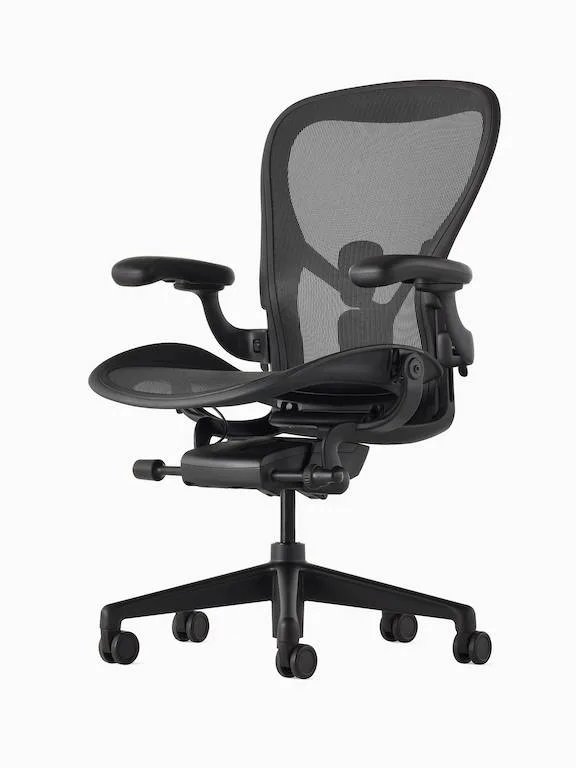
Herman Miller Aeron
Sizes A, B, and C8Z Pellicle suspension12-year, three-shift warrantyAeron remains the full-mesh reference because the chair is offered in three frame sizes rather than asking one seat shell to fit nearly everyone. Its 8Z Pellicle suspension divides the seat and back into zones with different tension, while available controls include adjustable arms, a tilt limiter, forward tilt, and PostureFit SL support.
The size system is Aeron's strength and its purchase risk. Size A, B, and C change the seat and back dimensions. A buyer who chooses by color or discount before checking the size chart can end up against a hard seat frame or without enough thigh support. Aeron also does not use a conventional sliding seat pan, so size selection does the work that seat-depth adjustment performs on Leap.
Main tradeoff: firm mesh and the surrounding frame are less forgiving than a cushion when the chair is mis-sized. Options also change the final controls and price substantially.
Best fit: warm rooms and buyers who already know they like a tensioned suspension seat.
Skip it when: you cannot try or return the correct size, or you prefer to shift across a soft seat.
Steelcase Gesture
360-degree armsOptional headrest400-pound capacityGesture is the specialist choice for people whose work moves between a keyboard, mouse, tablet, phone, and drawing surface. Its arms have a much wider movement range than ordinary height-and-pivot pads, allowing support close to the body or farther out without forcing the shoulders forward. Seat height and depth, recline tension, and back stops remain adjustable, and an integrated headrest is optional.
The back uses Steelcase's 3D LiveBack design to follow movement through recline. Compared with Leap, Gesture emphasizes arm placement and changing upper-body postures more than separate lumbar-position and lower-back-firmness controls.
Main tradeoff: the arm mechanism and premium build make it expensive, and buyers who need precise lumbar tuning may prefer Leap. The optional headrest should be ordered with the chair rather than assumed to be an easy later add-on.
Best fit: multi-device work, drawing tablets, controllers, and desks where arm position changes repeatedly.
Skip it when: you keep your forearms on the desk and would benefit more from granular lumbar controls.
Haworth Fern
Wave Suspension backFive-position back stop12-year warrantyFern is the strongest alternative for buyers who dislike feeling framed by a rigid backrest. Its Wave Suspension system uses a central stem, flexible fronds, and an outer cradle to support the back from the pelvic region upward while allowing side-to-side and reclining movement. The edgeless design is the main reason to choose Fern over a conventional mesh panel.
Current configurations can include seat-depth adjustment, a five-position back stop, 4D arms, height-adjustable lumbar, and 5-degree forward tilt. The important words are can include: several of those controls are optional, so two Fern chairs at different retailers may not be functionally equivalent.
Main tradeoff: configuration complexity and price. Haworth lists different warranted capacities depending on whether forward tilt is included, another reason to read the exact specification rather than the family name.
Best fit: buyers who move frequently and want a flexible back that feels less mechanically defined.
Skip it when: you want a simple one-SKU purchase or strong lumbar pressure without adding the lumbar option.
Herman Miller Embody
Pixelated SupportAdjustable BackfitFour-layer seatEmbody is built around pressure distribution and movement rather than a separate lumbar pad. A matrix of flexible pixels in the seat and back responds to small posture changes, while the Backfit control changes the backrest curve to follow the user's spine. The seat depth adjusts from about 15 to 18 inches, which gives the chair a useful fit tool that Aeron handles through separate sizes.
Herman Miller developed the chair with input from physicians and specialists in biomechanics, physical therapy, vision, and ergonomics. That development story does not prove universal comfort, but the four-layer seat, narrow upper back, and tunable spine give Embody a distinct design rationale rather than an ergonomic label alone.
Main tradeoff: price and simpler arm movement. The arms adjust in height and width but do not provide Gesture's broad pivot and depth range. There is no standard integrated headrest.
Best fit: buyers who change posture often and prioritize an adaptive seat and back over elaborate arm controls.
Skip it when: budget, head support, or highly mobile armrests matter more than the dynamic seat system.
Humanscale Freedom Task
Weight-sensitive reclineLinked arm adjustment15-year warrantyFreedom Task takes the opposite approach from a chair covered in knobs. Its weight-sensitive recline is designed to provide resistance automatically, and the arms can move together so their height remains consistent. Seat depth, seat height, and back height still adjust, giving the chair the essential geometry controls without a separate recline-tension routine.
This simplicity works best for someone who wants to sit and move without tuning the chair throughout the day. It is less appealing to a buyer who wants to lock several recline angles or set a precise resistance independent of body weight.
Main tradeoff: configuration differences. Arm style, cushion material, frame, cylinder, and upholstery can change the feel and price. The cited US product carries a 15-year, 24/7 warranty, but seller and configuration eligibility still need confirmation.
Best fit: a clean workspace and a buyer who prefers automatic support to a control panel.
Skip it when: you want multiple back-stop positions, mesh, or independent arm adjustments throughout the day.
SIHOO Doro C300
Mesh seat and backAdaptive lumbar330-pound maximum loadThe Doro C300 brings a full-mesh seat, self-adaptive lumbar support, height-adjustable backrest, coordinated 4D arms, and recline to a lower price class than Aeron. Its lumbar pad follows the lower back as the user moves, and the armrests move with the back during recline.
The mechanism count can hide a fit limitation: SIHOO lists a maximum hip width around 20.3 inches and seat depth around 17.1 to 18.1 inches. The lumbar support adapts, but it cannot be manually placed with the same precision as a height-adjustable pad. Those details make the return policy more important than the feature list.
Main tradeoff: a three-year warranty and a narrower practical fit than premium commercial chairs. Standard and footrest versions are both sold, so match the pictured configuration and listing title to what you want.
Best fit: average-size users in warm rooms who prefer a firm, breathable surface.
Skip it when: you need a wide seat, manually positioned lumbar support, or long-term commercial parts coverage.
HON Ignition 2.0
Commercial task-chair familySeat slider on selected SKUsConfiguration-specific coverageIgnition 2.0 is the practical commercial choice for buyers who want a conventional cushioned seat and a broad product family. Selected task versions include a seat slider, height-adjustable lumbar support, synchro-tilt, tilt tension, and arms that adjust in both height and width. Those controls can create a useful fit without the premium finish price of Leap or Gesture.
The problem is that Ignition is a family, not one specification. Mesh, ReActiv, and upholstered backs appear under similar names. Arms, seat controls, weight ratings, and warranties can also differ. The model number and feature list matter more than the thumbnail.
Main tradeoff: buying complexity and a functional rather than luxurious feel.
Best fit: buyers who value a mature commercial line and are willing to verify the full model number.
Skip it when: you want a simple, identical configuration across every retailer.
Steelcase Series 1
Compact footprint400-pound capacityLong US warrantySeries 1 is the compact route into Steelcase's current chair line. It offers seat-height and seat-depth adjustment, weight-activated recline with a boost setting, an upright back stop, adjustable lumbar options, and either 4D or height-adjustable arms. Back choices include 3D Microknit and Air Back versions.
The chair makes sense where floor space, desk clearance, and service support matter more than a broad, plush seat. Its stated 400-pound capacity is unusually high for the size, but capacity does not prove seat width or long-session comfort for a particular user.
Main tradeoff: the compact seat and simpler recline are practical rather than luxurious. Upgraded arms and upholstery can also change the final price enough to overlap with larger chairs.
Best fit: compact offices, shared task areas, and buyers who prioritize warranty and a smaller visual footprint.
Skip it when: you want a deeper seat, an expansive back, or the more tunable recline of Leap.
Which ergonomic chair should you buy?
| Your priority | Start with | Why |
|---|---|---|
| Maximum useful adjustment | Steelcase Leap | Separate controls for seat depth, arms, lumbar position, lower-back firmness, and recline |
| Best value for a full-time home office | Branch Ergonomic Chair Pro | Most essential fit controls without a premium-brand price |
| Premium full-mesh seat | Herman Miller Aeron | Three physical sizes and a proven suspension design |
| Arms that follow device changes | Steelcase Gesture | 360-degree arms support more upper-body positions |
| A back that flexes in several directions | Haworth Fern | Edgeless Wave Suspension back follows movement |
| Automatic recline with fewer controls | Humanscale Freedom Task | Weight-sensitive mechanism reduces manual tuning |
| Full mesh below $500 | SIHOO Doro C300 | Adaptive lumbar and coordinated arms at a lower price tier |
| Hard cap below $500 | Use our budget guide | It compares five chairs within the price constraint instead of mixing tiers |
Fit the chair before comparing brands
Seat height: set the chair so the feet rest flat on the floor or a footrest and the thighs are supported without pressure. A tall cylinder can help at a high desk, but it does not fix a work surface that forces the shoulders upward.
Seat depth: sit fully against the backrest and look for a small gap behind the knees. A sliding seat pan is especially useful when several people share a chair. Aeron handles this through three chair sizes, so its size chart must be treated as an adjustment decision.
Arms: support relaxed shoulders while allowing the chair to approach the keyboard. Width matters for body fit; depth and pivot matter when switching between typing, a mouse, a phone, or a tablet.
Lumbar and recline: lumbar support should meet the inward curve of the lower back without forcing the pelvis forward. Recline should allow position changes while keeping the feet supported and the work surface reachable.
Ergonomic limit: a chair can support a working position, but it cannot make uninterrupted sitting healthy or treat pain. OSHA recommends neutral support and frequent position changes, and NIOSH recommends movement breaks and varied posture.
Mesh or cushioned seat?
Choose full mesh when airflow is the priority and you already know you tolerate a firm suspension surface. Aeron uses separate chair sizes to control how its frame meets the body. The SIHOO C300 offers more adjustment at a lower price, but its seat width and adaptive lumbar make the fit more polarizing.
Choose an upholstered seat when you want a less restrictive edge and more freedom to shift. Leap, Gesture, Branch Pro, Fern, Embody, Freedom, HON, and Series 1 use cushions in their common configurations. Foam softness during a five-minute trial does not predict support after a full work session, so test the chair during real typing and meeting blocks.
What higher prices should buy
A premium price should buy more than styling. Look for a broader fit range, smoother recline, controls that remain stable after adjustment, replacement parts, clear warranty labor, and a seller that can service the chair. Leap, Aeron, Gesture, Fern, Embody, and Freedom justify consideration through distinct mechanisms and long coverage, but no mechanism is valuable if the seat dimensions are wrong.
Below $500, prioritize seat depth, arm position, and returnability. Branch Pro and SIHOO C300 represent different material paths in this guide, while our office chairs under $500 comparison adds HON Ignition 2.0, Steelcase Series 1, and Staples Dexley for a stricter budget decision.
Treat returns and warranty as chair features
Before ordering, record the return window, return-shipping cost, restocking or chair fee, original-box requirement, and whether the chair must be disassembled. A 30-day trial is less useful when returning a large chair costs hundreds of dollars.
Warranty coverage can depend on the seller, exact SKU, region, shift use, fabric, casters, and proof of purchase. Marketplace inventory can include unauthorized, used, open-box, or refurbished units under a new-product title. Confirm who will handle a cylinder, arm pad, or mechanism failure several years later.
Should you buy a refurbished premium chair?
A professionally rebuilt Leap, Aeron, Gesture, Amia, or Zody can offer better mechanisms than a new budget chair. It can also arrive with a third-party cylinder, replacement foam of unknown density, worn arm pads, mismatched fabric, or no transferable manufacturer warranty.
Ask which parts were replaced, who made them, whether the cylinder and casters are new, what cosmetic grade means, how long the refurbisher covers the chair, and who pays return freight. For Aeron, confirm the size. For every chair, test all controls and check side-to-side play before the return window closes.
Other chairs we considered
The Branch Verve is visually lighter and appears frequently in current roundups, but Branch Pro offers more useful adjustment for less money in many configurations. The Steelcase Amia is a strong upholstered task chair, yet Leap provides a clearer reason to spend at the premium level and Series 1 covers the compact role. The Herman Miller Sayl remains a compact design-led alternative, though Series 1 offers a simpler value path.
The Staples Dexley is still our lowest-cost choice in the under-$500 guide, but its fixed, deep seat does not belong in a broad top-ten list centered on fit range. Gaming-style chairs and models marketed mainly through massage, footrests, or thick padding were excluded when those features did not improve core seat, arm, lumbar, and recline fit.
Frequently asked questions
What is the best ergonomic office chair overall?
The Steelcase Leap is our research-led overall pick because its seat depth, armrests, lumbar position, lower-back firmness, recline tension, and back stops can address more fit problems than most one-size chairs. The best chair still depends on body dimensions, desk height, and return options.
Is the Herman Miller Aeron better than the Steelcase Leap?
The Aeron is the better starting point for buyers who prefer a firm, breathable suspension seat and can choose the correct A, B, or C size. The Leap is more forgiving for buyers who want an upholstered seat, adjustable seat depth, and more granular lower-back controls.
How much should you spend on an ergonomic office chair?
Useful ergonomic controls are available below $500, while premium chairs usually add broader fit ranges, smoother recline mechanisms, longer warranties, replacement parts, and more finish options. Spend for the fit control and support network you need, not for a chair's visual complexity.
Which office-chair adjustments matter most?
Seat height and depth come first, followed by arm height and width, lumbar placement, and a recline that supports movement. Headrests, forward tilt, and extra arm pivots are useful for specific postures but do not compensate for a seat that is too deep or narrow.
Can an ergonomic chair fix back pain?
No chair can diagnose or treat back pain. A well-fitted chair can support a neutral working position, but regular position changes and movement breaks still matter. Persistent, severe, or radiating pain needs advice from a qualified medical professional.
Is mesh better than a cushioned office chair?
Mesh is usually cooler and can distribute pressure well when tension and frame shape suit the user. A cushioned seat can feel less restrictive and is often easier to shift around on. Fit, edge pressure, material quality, and returnability matter more than the material label.
How we researched this guide
We reviewed current US result pages for "best ergonomic office chair," "best office chair," and related long-hours and home-office queries. We used large hands-on publications to identify recurring finalists and reported tradeoffs, then checked product controls, dimensions, capacities, warranty language, and current configurations against manufacturer or authorized-retailer pages. We did not copy another publisher's order, scores, measurements, or first-person claims.
Each top-ten chair needed a distinct buyer role, current US availability, documented fit controls, a stated warranty path, and evidence beyond marketplace reviews. Ranking factors were fit range, practical adjustment, recline and material design, warranty and repair confidence, return risk, and value within its price tier.
Primary product sources
- Steelcase Leap product and configuration data
- Branch Ergonomic Chair Pro product data
- Herman Miller Aeron product data
- Steelcase Gesture product and configuration data
- Haworth Fern product data and Haworth warranty
- Herman Miller Embody product data
- Humanscale Freedom Task product data
- SIHOO Doro C300 product data
- HON Ignition example task-chair SKU
- Steelcase Series 1 product and configuration data
Independent evidence checked
- TechRadar: current office-chair guide
- Tom's Guide: current office-chair roundup
- WIRED: current office-chair guide
- TechGearLab: office-chair comparison
- NBC Select: ergonomic-chair criteria and picks
Product images are shown for editorial identification and come from the manufacturer pages or cited retailer page recorded in our internal product dataset. Finishes, arms, lumbar options, headrests, and other pictured details may differ from the configuration sold by a particular seller.
 Best Noise-Cancelling Headphones
 Best Air Purifiers