Review basis: Research-led; not hands-on. We checked Beatbot's current US pages and specifications and compared them with independent hands-on reporting from WIRED and PCWorld. Manufacturer figures below are labeled as published claims rather than TestedHarbor measurements. See our evidence standards.
Affiliate disclosure: This page contains Amazon affiliate links. As an Amazon Associate I earn from qualifying purchases. We may earn a commission at no extra cost to you, and commercial relationships do not determine our recommendations. Learn more.
Beatbot is worth considering when a cordless cleaner, easy surface retrieval, long runtime, or shallow-platform coverage solves a specific problem. For many pools, Sora 30 is the sensible starting point because it covers the floor, walls, waterline, and shallow areas without charging extra for surface skimming. Sora 70 is the step-up when floating debris is frequent. AquaSense 2 Ultra adds camera-based mapping and more cleaning options, while AquaSense X adds a large rinse-and-charge station.
The expensive model is not automatically the most hands-off. AquaSense X reduces basket rinsing, but it also adds a heavy station that needs water, drainage, power, a level location, and periodic cleaning. Across the range, buyers still need to match the robot to pool geometry, debris, filter fineness, charging routine, and lifting ability.
Quick verdict
Start with Sora 30 for underwater cleaning, choose Sora 70 only when water-surface debris matters, and treat both AquaSense flagships as specialist upgrades. AquaSense 2 Ultra makes sense for a large or complex pool where mapping and configurable passes justify a roughly 29-pound robot. AquaSense X is for buyers whose main pain point is post-cycle filter rinsing and who already have a practical station location. Sora 10 is the simpler choice when the pool has no very shallow ledge and manual retrieval is acceptable.
Best starting point
Sora 30 for floor, wall, waterline, and shallow-platform cleaning without paying for surface skimming.
Floating leaves matter
Sora 70 adds water-surface cleaning. Compare a separate skimmer if surface debris is the dominant job.
Premium automation
AquaSense 2 Ultra adds mapping; AquaSense X adds station-based rinsing but also more setup and weight.
Beatbot models compared by actual cleaning job
The table uses Beatbot-published US specifications checked on August 9, 2026. Beatbot's current pages conflict on a few runtime, coverage, basket, and minimum-depth figures. Those conflicts are identified instead of being silently resolved in the brand's favor.
| Model | Best starting use | Published runtime | Cleaning zones | Main caution |
|---|---|---|---|---|
| Sora 30 | Most standard pools | Up to 5 hours underwater | Floor, walls, waterline, shallow platforms | No surface skimming; 150-micron standard filter |
| Sora 70 | Underwater plus surface debris | Up to 5 hours floor or 7 hours surface | Floor, walls, waterline, surface, shallow platforms | Independent testing found mixed floor and skimming results |
| Sora 10 | Simpler standard or above-ground pool | Up to 5 hours floor or 4 hours full underwater cycle | Floor, walls, waterline, platforms | Manual retrieval and conflicting shallow-depth wording |
| AquaSense 2 Ultra | Large or complex pool | Up to 10 hours surface; underwater figures vary by page and mode | Floor, walls, waterline, surface, platforms; optional clarifier | Heavy, expensive, and surface pickup varies by debris |
| AquaSense X | Premium system with automated basket rinsing | Up to 5 hours underwater or 10 hours surface | Floor, walls, waterline, surface, shallow platforms | Station needs water, drain, power, space, and its own maintenance |
Choose a Beatbot by pool problem
Use the evidence level before treating a feature as a result. "Independent support" means a hands-on source observed the relevant behavior. "Mixed independent evidence" means the result changed by debris, mode, or pool. "Published specification" means Beatbot states the capability, but TestedHarbor has not found a directly comparable independent result for that exact scenario. The Sora tests cited here were conducted separately, not as a controlled head-to-head test.
| Pool problem | Start with | Evidence level | Decision basis and limitation |
|---|---|---|---|
| Routine floor, wall, and waterline cleaning | Sora 30 | Independent support | WIRED reported strong average coverage and about 4.5 hours of observed runtime, while noting retained debris in one sharp corner and a basket that took effort to rinse. |
| Recurring floating leaves or insects | Sora 70 | Mixed independent evidence | Sora 70 adds a surface mode, but PCWorld found pickup depended on debris type. Compare a dedicated skimmer when the surface is the dominant daily job. |
| Lowest published dry weight in the current lineup | Sora 10 | Published specification | Beatbot lists 18.74 pounds, but retrieval is manual and its current minimum-depth wording conflicts across official material. |
| Shallow platform at least 8 inches deep | Sora 30 or Sora 70 | Published specification | Beatbot publishes shallow-platform support for both models, subject to minimum area and depth. Steps, edges, slopes, and water level can still change access. |
| Fine dust, pollen, or silt | Exact Sora bundle with the optional 3-micron filter | Published accessory | The standard basket is 150 microns. Verify filter compatibility and whether the finer basket is included; no current independent Sora head-to-head isolates filter performance. |
| Complex geometry and configurable passes | AquaSense 2 Ultra | Mixed independent evidence | Independent reviews support strong underwater cleaning, but also identify heavy handling and inconsistent surface pickup. |
| Less manual basket rinsing after frequent cycles | AquaSense X | Independent limitation | WIRED found the station reduced rinsing work but did not remove every piece of debris and still required moisture and station upkeep. |
Deciding between the two Sora models? Read our focused Beatbot Sora 30 vs Sora 70 comparison for the shared specifications, surface-cleaning tradeoff, filtration, weight, runtime, and exact buyer paths.
Which Beatbot model should you compare?
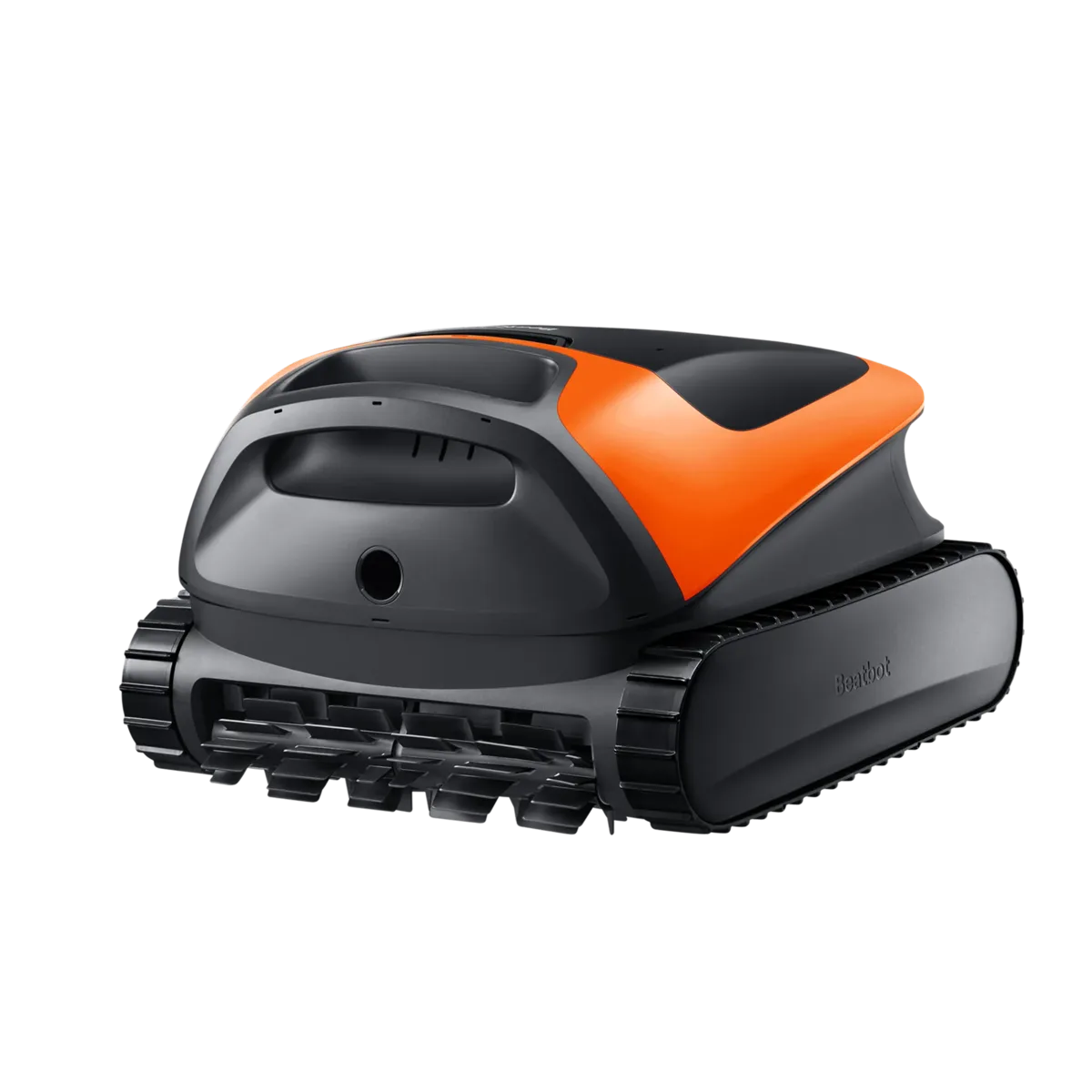
Beatbot Sora 30
Official specs plus independent hands-on testTypical price range: $1,200–$1,500 (varies by bundle and retailer; check current listing for exact price)
Sora 30 keeps the functions that matter to many pool owners: floor, wall, waterline, and shallow-platform cleaning, a published 6,800 GPH flow rate, a 10,000mAh battery, up to five hours of runtime, and surface parking at the end of a cycle. It does not skim floating debris. Current Beatbot material alternates between approximately 5 and 5.2 liters for basket capacity, so use the exact listing as the bundle check.
WIRED's week-long test reported strong coverage, about 4.5 hours of observed runtime, and easy retrieval after the robot floated. The tester also found that one sharp corner retained debris and that the open basket was more tedious to rinse than expected. That evidence supports Sora 30 as a routine cleaner, not a substitute for a seasonal deep cleanup.
Best fit: a pool that needs broad underwater coverage and shallow-area access but not water-surface cleaning
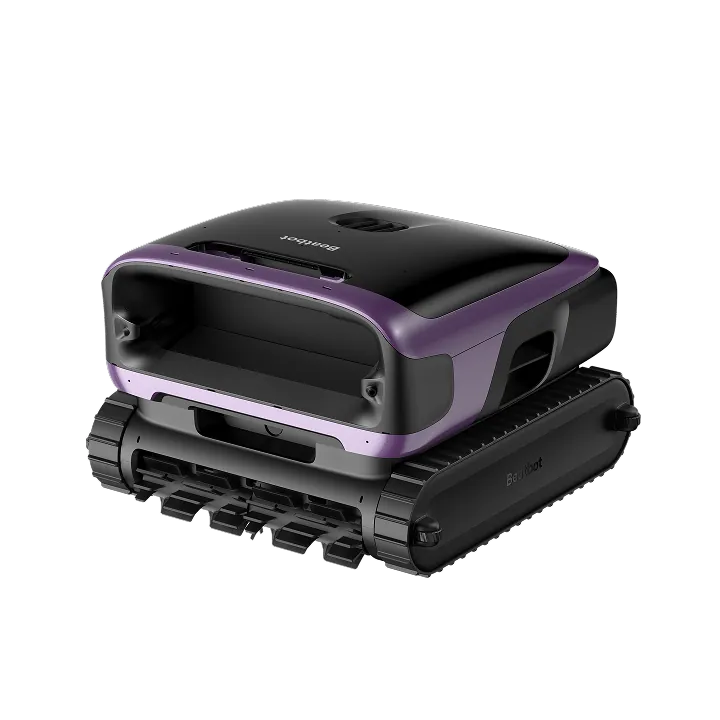
Beatbot Sora 70
Official specs plus independent hands-on testTypical price range: $1,400–$1,700 (varies by bundle and retailer; check current listing for exact price)
Sora 70 adds water-surface cleaning to the floor, wall, waterline, and shallow-platform coverage of the Sora line. Beatbot publishes a 10,000mAh battery, up to five hours of floor cleaning, up to seven hours on the surface, a 6-liter basket, 6,800 GPH flow, and a 22.9-pound dry weight.
PCWorld found surface parking especially useful, but its test also found slower cleaning, weaker floor performance than other Beatbot robots, and skimming that depended on the debris. The correct reason to choose Sora 70 is not simply that it cleans more zones; it is that enough floating leaves or insects reach the pool to justify combining skimming with underwater cleaning.
Best fit: a pool with recurring surface debris where one all-in-one cordless machine is preferable to a separate skimmer
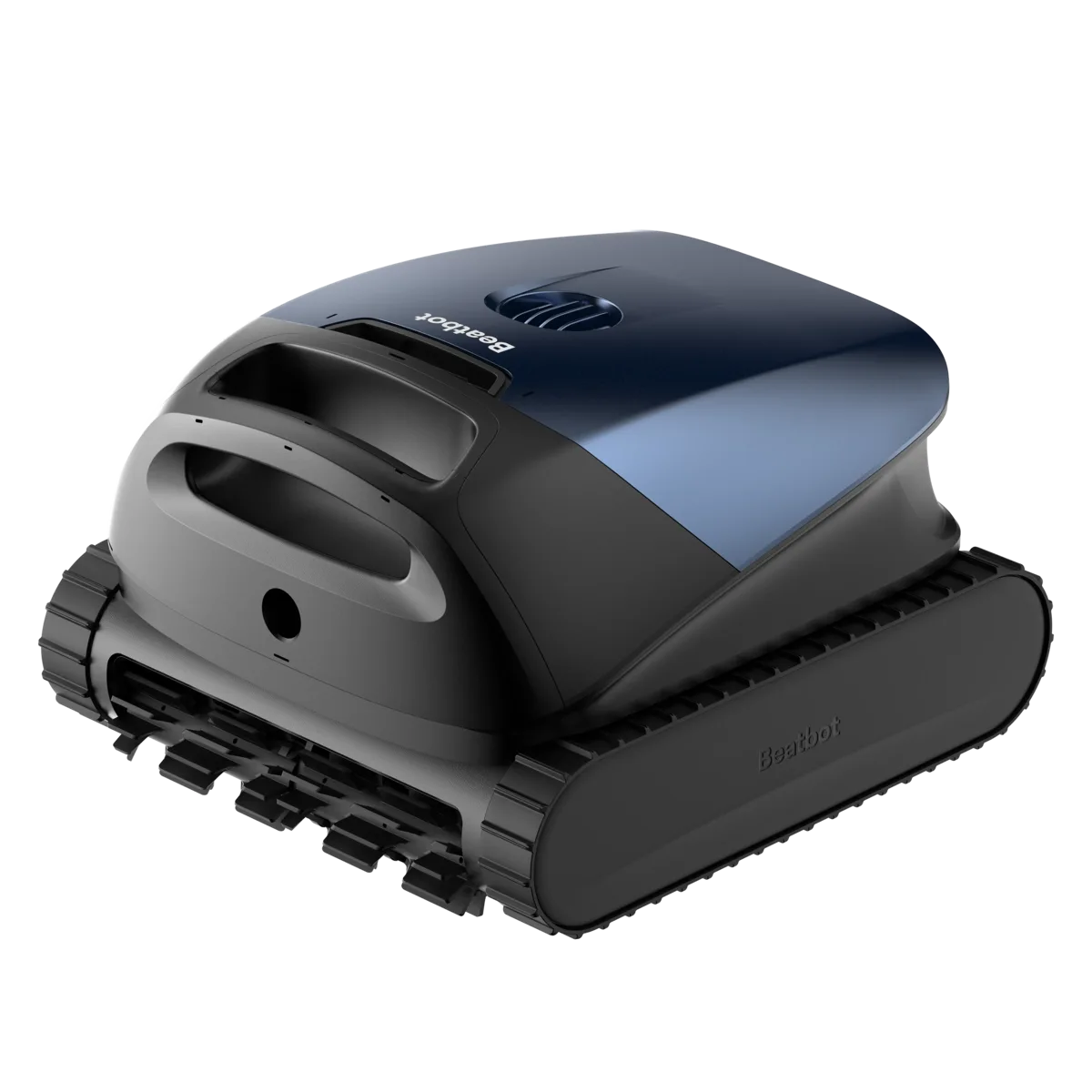
Beatbot Sora 10
Manufacturer specificationsTypical price range: $800–$1,100 (varies by bundle and retailer; check current listing for exact price)
Sora 10 is the lighter, lower-complexity option. Beatbot publishes a 7,800mAh battery, up to five hours in floor mode, up to four hours for floor-wall-waterline cleaning, a 5-liter 150-micron basket, 6,800 GPH flow, a 3.5-hour charge, and an 18.74-pound dry weight.
It lacks water-surface cleaning and automatic surface parking, so retrieval is more manual. Beatbot's own current material also alternates between approximately 12 inches and 13.8 inches for minimum shallow-water depth. Measure the ledge and confirm the exact manual before relying on platform cleaning.
Best fit: a standard or above-ground pool where core underwater cleaning matters more than surface parking or advanced mapping
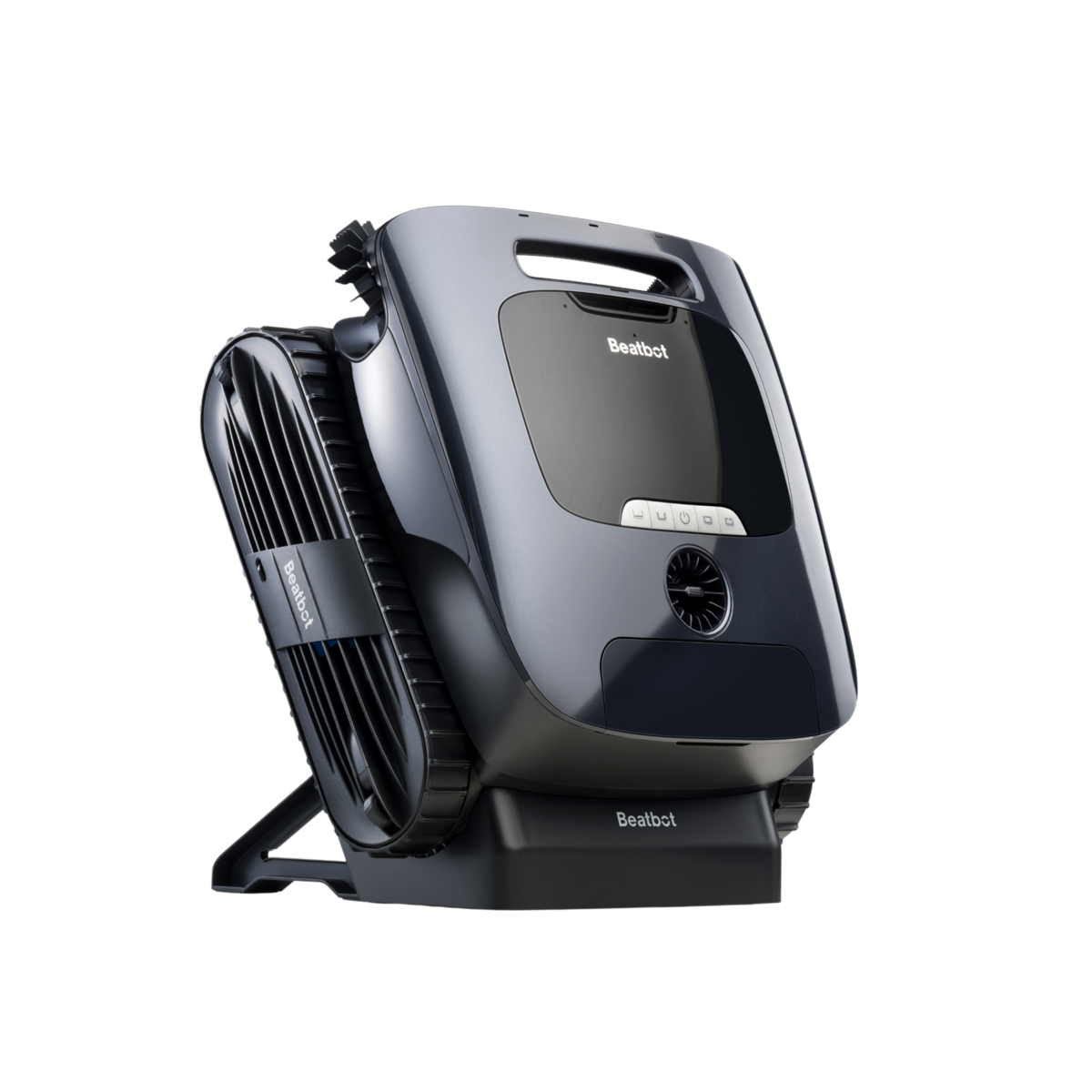
Beatbot AquaSense 2 Ultra
Official specs plus two independent hands-on testsTypical price range: $2,500–$3,200 (varies by bundle and retailer; check current listing for exact price)
AquaSense 2 Ultra adds camera-based debris detection, 27 published sensors, configurable cleaning passes, surface skimming, surface parking, and optional clarifier dispensing. Beatbot lists a 13,400mAh battery, 5,500 GPH flow, dual filter chambers, and a dry weight around 29.1 pounds.
Independent evidence is mixed in a useful way. PCWorld found excellent floor cleaning, long battery life, and easy waterline retrieval, but weak surface pickup and difficult handling when waterlogged. Android Authority also highlighted strong cleaning and the bulky body. The clarifier kit is separate and does not replace chemistry testing.
Beatbot's pages currently conflict on floor runtime and single-cycle pool coverage. Some official copy states roughly 4.5 to 5 hours and 3,444 square feet, while other current comparison material uses up to 6 hours and 3,875 square feet. Check the exact listing and mode instead of treating one figure as universal.
Best fit: a large, irregular, or stepped pool where mapping and configurable passes justify the weight and cost
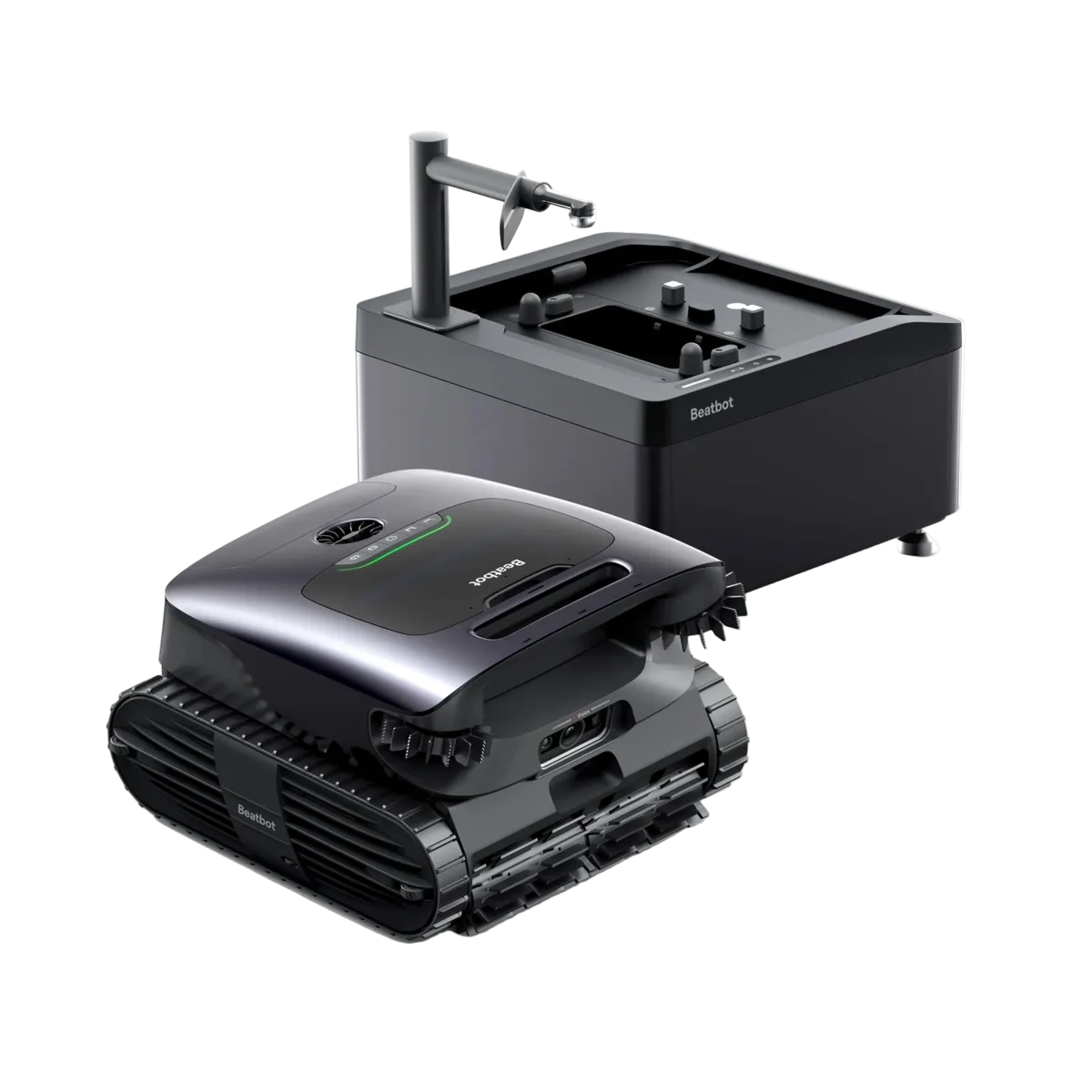
Beatbot AquaSense X
Official specs plus independent hands-on testTypical price range: $3,500–$4,500 (includes AstroRinse station; varies by bundle and retailer; check current listing for exact price)
AquaSense X pairs a cleaner similar in concept to AquaSense 2 Ultra with the AstroRinse station. Beatbot publishes 6,800 GPH flow, a 13,400mAh battery, up to five hours of underwater cleaning, ten hours of surface cleaning, a 5-liter onboard basket, and a 22-liter station debris bin.
The station is the decision. It performs a short rinse and charges the robot, but it also weighs about 41.9 pounds and requires a nearby water inlet, drain, electrical supply, level base, and ventilation. The robot itself is about 28.9 pounds before retained water.
WIRED found excellent floor, wall, and waterline pickup but little cleaning difference from AquaSense 2 Ultra. Its station did not remove every piece of basket debris, retained moisture, and still needed periodic cleaning. AquaSense X reduces one maintenance step; it does not eliminate pool-robot maintenance.
Best fit: a premium buyer with a suitable station location whose main frustration is rinsing the filter after frequent cycles
Is AquaSense X actually self-cleaning?
It automates basket rinsing, not ownership. The robot must still be lifted from the pool and placed on the AstroRinse station. The station needs water, drainage, power, a level location, and enough airflow. Its debris bin and mesh bag need emptying, wet material should not be left indefinitely, and remaining debris may still require hand removal.
Beatbot's claim of long intervals between bin emptying is a manufacturer estimate based on a stated use pattern. Pool size, leaf load, pollen, weather, and how quickly wet debris is removed will change the real interval.
Do you need water-surface cleaning?
Surface mode matters only when debris spends enough time floating to be collected. Sora 70, AquaSense 2 Ultra, and AquaSense X can skim, but a wide standalone skimmer can intercept leaves more continuously. PCWorld observed about 40 percent surface-debris capture in its AquaSense 2 Ultra test, and WIRED collected less than half with AquaSense X. Those results do not prove every pool will perform the same, but they show why a surface-mode checkbox is not enough.
- Choose Sora 30 or Sora 10: floating debris is occasional and floor, wall, and waterline cleaning are the real workload.
- Choose Sora 70: you want one robot to skim and clean underwater, and mixed surface performance is acceptable.
- Compare a dedicated skimmer: leaves, pollen, and insects land continuously or surface cleaning is more important than underwater automation.
Filtration matters more than the suction headline
The current Beatbot flagships and Sora models commonly ship with filters around 150 microns. That is appropriate for leaves, insects, and visible grit, but pollen, fine dust, and silt may require a finer filter. Beatbot promotes an optional 3-micron filter for parts of the Sora line, but availability and inclusion can differ by model and listing.
Do not compare 6,800 GPH and 5,500 GPH figures in isolation. Brush contact, path coverage, intake geometry, filter loading, cycle length, and pool corners determine whether debris actually reaches the basket. Check whether the fine filter is included, sold separately, or unavailable for the exact model.
What can the Beatbot app do underwater?
Standard Wi-Fi does not travel reliably through pool water. Beatbot's app can select modes, update firmware, show records, and support surface navigation or parking on compatible models. It should not be interpreted as live underwater steering.
App features also vary by model. AquaSense models have more configurable passes and mapping, while Sora controls are simpler. A connection icon on a listing does not prove that a specific command works during the submerged part of a cycle.
What about AquaSense 2 and AquaSense 2 Pro?
Beatbot still lists AquaSense 2 and AquaSense 2 Pro, and discounted inventory may remain attractive. This guide focuses on the five models in Beatbot's current 2026 selection guide so the recommendation does not mix older and newer roles.
When comparing an older AquaSense listing, check the exact generation, cleaning zones, surface mode, clarifier support, dock, warranty, filter, app functions, and seller. A lower price is useful only if the listing still solves the same pool problem.
Beatbot or Aiper?
Choose by the exact robot, not the logo. Beatbot is the stronger comparison when easy surface parking, long cycles, shallow-platform coverage, AquaSense mapping, or the AquaSense X rinse station is central to the decision. Aiper offers a wider step-down path, including a simple floor-only model and a separate solar-assisted surface skimmer, alongside its premium all-in-one cleaners.
For the other side of that decision, see our Aiper pool cleaner review. Compare pool fit, filtration, lifting weight, charging routine, independent evidence, and the exact current listing before choosing either brand.
What to verify before buying
- Pool geometry: note dimensions, slopes, drains, corners, wall transitions, steps, ledges, and minimum water depth.
- Cleaning zones: floor, walls, waterline, surface, and shallow platforms are separate capabilities.
- Debris type: basket volume helps with leaves; fine dust and pollen make filter micron rating more important.
- Runtime definition: floor, full underwater, surface, Eco, and repeated-pass modes are not equivalent.
- Retrieval weight: add retained water to the published dry weight and consider the path to the charging location.
- Charging setup: distinguish a cable, contact dock, and the AquaSense X water-and-drain station.
- App limits: verify which controls work before a cycle, underwater, at the surface, and after retrieval.
- Included parts: check standard and fine filters, clarifier kit, retrieval hook, cover, caddy, dock, and replacement supplies.
- Seller and support: confirm US warranty terms, fulfillment, returns, replacement process, and parts availability.
Who should buy Beatbot, and who should skip it?
Buy Beatbot
You want cordless cycles, can lift and recharge the robot, and value surface parking, shallow-area cleaning, or premium mapping.
Compare carefully
Your pool has sharp corners, fine silt, heavy floating debris, unusual ledges, or a long carry to the charging area.
Skip or compare corded
You need unattended weekly scheduling, no battery downtime, finer standard filtration, or a lighter ownership routine.
How we evaluated the Beatbot lineup
We mapped the decisions behind searches such as "Beatbot pool cleaner review," "best Beatbot pool cleaner," and "Sora 70 vs AquaSense 2 Ultra." The page therefore answers brand fit first, then separates models by surface cleaning, shallow-platform access, filtration, runtime, retrieval, and station requirements.
We checked Beatbot's current US lineup guide and each product page for stated cleaning zones, runtime, battery, flow, basket, weight, minimum depth, warranty, and accessories. We then used WIRED's AquaSense X and Sora 30 tests and PCWorld's Sora 70 and AquaSense 2 Ultra tests to identify observed performance, maintenance, and handling limits.
We did not rank models by temporary price, coupon, sales rank, or retailer review count. We also did not silently reconcile conflicting manufacturer figures. Exact bundles, firmware, seller terms, and specifications can change.
Frequently asked questions
Are Beatbot pool cleaners good?
Beatbot pool cleaners are worth comparing when cordless operation, surface parking, long runtime, or shallow-area cleaning solves a real pool-care problem. The practical value depends more on the exact model, pool shape, debris type, lifting weight, and filter than on the brand's premium features.
Which Beatbot pool cleaner is best for most pools?
The Sora 30 is the practical starting point for many pools because it cleans the floor, walls, waterline, and shallow platforms without charging for surface skimming. Choose Sora 70 when floating debris is frequent, and move to AquaSense only when its mapping or station features justify the added weight and complexity.
Which Beatbot models clean the water surface?
Sora 70, AquaSense 2 Ultra, and AquaSense X include water-surface cleaning. Sora 30 and Sora 10 focus on underwater zones. Independent tests show surface results can vary with debris type, so frequent floating leaves may still favor a dedicated skimmer.
Is the Beatbot AquaSense X really self-cleaning?
The AstroRinse station rinses the robot's filter and collects debris, but the system is not maintenance-free. It still needs a level location with water, drainage, and power, and the debris bin, mesh bag, station, and remaining basket debris need periodic attention.
Can the Beatbot app control a cleaner underwater?
No standard Wi-Fi connection provides reliable live control underwater. Depending on the model, the app can select modes, install firmware, review cleaning records, or steer and retrieve the robot while it is on the water surface.
Does a Beatbot pool cleaner replace pool chemicals or a pool service?
No. A Beatbot can collect debris and scrub supported surfaces, but it does not replace sanitizer testing, pH and alkalinity management, filter-system care, brushing missed areas, or seasonal maintenance. Clarifier dispensing is also separate from water-chemistry control.
Is Beatbot better than Aiper?
Neither brand is automatically better. Beatbot is the stronger comparison when surface parking, long runtimes, shallow-platform coverage, or the AquaSense X rinse station matters. Aiper offers a broader ladder from simple floor cleaners to separate skimmers and premium all-in-one models. Compare exact models, not brand names.
What should I check before buying a Beatbot pool cleaner?
Confirm the exact model, pool type and maximum area, minimum operating depth, cleaning zones, included filter, runtime mode, charging setup, dry weight, surface-parking behavior, warranty terms, seller, and bundle contents. Beatbot's own pages contain a few conflicting figures, so treat the exact current listing and manual as the final check.
- Current lineup and manufacturer specifications: Beatbot's 2026 cordless pool-cleaner guide and current pages for Sora 30, Sora 70, Sora 10, AquaSense 2 Ultra, and AquaSense X.
- Independent Sora 30 test: WIRED's April 2026 hands-on review.
- Independent Sora 70 test: PCWorld's March 2026 hands-on review.
- Independent AquaSense 2 Ultra evidence: PCWorld's October 2025 hands-on review and Android Authority's long-form test.
- Independent AquaSense X test: WIRED's July 2026 hands-on review.
- Images: current Beatbot US product pages. Product appearance, color, and included accessories can change.
Specifications, firmware, bundles, seller terms, and availability can change. Confirm the exact US listing and current manual before buying.
Final recommendation
Compare Sora 30 first for most pools. Choose Sora 70 when floating debris makes surface cleaning worth the tradeoff. Choose AquaSense 2 Ultra only for a large or complex pool where its mapping and configurable passes solve a real coverage problem. Choose AquaSense X only when automated basket rinsing is worth a permanent station with water, drainage, power, and periodic upkeep. Choose Sora 10 when lower weight and simpler underwater cleaning matter more than surface parking.