A dash cam is one of the few car accessories that can become important after an accident, a parking-lot hit-and-run, or a road-rage incident. For US drivers, the right choice is not always the most expensive camera or the longest spec sheet. The better question is whether the camera can reliably record useful footage when you actually need it.
This guide explains how to choose a dash cam for everyday driving in the United States, including 4K video quality, front and rear coverage, parking mode, night vision, heat resistance, storage, and cabin recording.
Quick summary
For most US drivers, start with dependable 4K front footage, then decide whether you need rear and cabin coverage.
Considering Vantrue? Compare daily commuter, rideshare, parking-mode, and road-trip setups before checking current Amazon bundles. Want the single-model breakdown? Read the Vantrue N4 Pro review.
Best dash cam setup by driving need
Use this quick path before comparing specs, current bundles, or model-specific reviews.
| Driving need | Best starting point | Next step |
|---|---|---|
| Daily commuting | 4K front or front-and-rear dash cam | Keep reading for the core buying checklist. |
| Uber, Lyft, taxi, or delivery | Three-channel front, cabin, and rear setup | Compare Vantrue 3-channel setups. |
| Street or apartment parking | Parking mode support with the right power setup | Check Vantrue parking-mode bundle options. |
| Family car or road trips | Front and rear coverage, with cabin recording if interior context matters | Compare broader coverage setups before choosing a compact model. |
| Specific Vantrue N4 Pro research | Model-level review and trade-offs | Read the Vantrue N4 Pro review. |
Why US drivers are buying dash cams
Driving in the US can mean a crowded daily commute, a long interstate trip, street parking, school drop-offs, or rideshare work. A dash cam can help record what happened before, during, and after an incident.
Common use cases include highway accidents, rear-end collisions, parking lot hit-and-runs, road rage incidents, rideshare passenger disputes, teen driver monitoring, road trip footage, and insurance claim documentation.
A dash cam does not prevent accidents. Its value is that it can provide video context when memories, written reports, or witness accounts are incomplete.
Quick answer: what most US drivers should buy
Most drivers should start by looking for a reliable 4K front dash cam with clear daytime footage, good low-light performance, loop recording, and high-endurance microSD card support.
If you drive daily, park in public lots, or spend time on highways, a front-and-rear dash cam is usually more useful than a front-only model. Rear coverage can matter for tailgating, rear-end collisions, and parking damage.
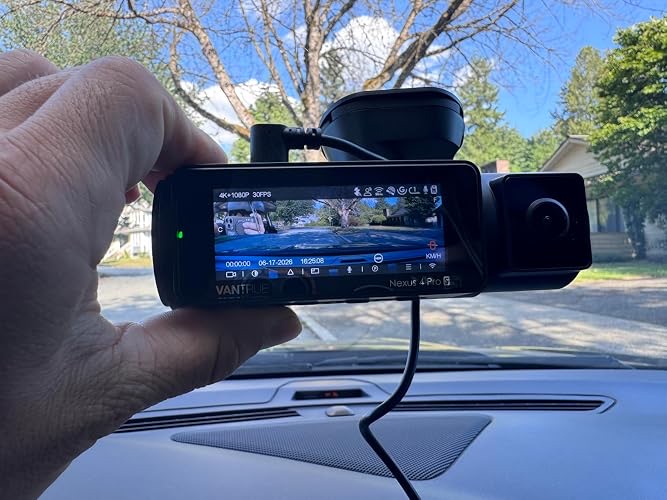
A three-channel dash cam makes the most sense if you also want cabin footage. For example, a model such as the Vantrue N4 Pro can be worth considering if you want front, cabin, and rear recording in one setup. That said, many everyday drivers may be better served by a simpler front-and-rear kit with strong parking mode and reliable storage.
Why a 3-channel dash cam is worth considering
A basic dash cam records only the road ahead. That may be enough for some drivers, but it leaves gaps if something happens behind the car or inside the cabin.
- Front view: traffic, road signs, lane position, and intersections.
- Cabin view: passengers, driver activity, and interior events.
- Rear view: vehicles behind you, rear-end collisions, and parking situations.
This setup is especially relevant for Uber, Lyft, taxi, delivery, and family vehicles. It can also be useful for drivers who often park in busy lots or want a more complete record of what happened around the vehicle.
Cabin recording is not necessary for everyone. If privacy is a concern, check whether the camera lets you disable cabin video or audio recording.
Key features to check before buying a 4K dash cam
1. 4K front recording
The front camera is the most important part of the system. A 4K dash cam can capture more detail than a basic 1080p camera, especially during daytime driving. Better front footage can help with license plates, lane markings, traffic lights, road signs, and vehicle movement before an accident.
Resolution is not the only factor. Sensor quality, lens quality, exposure control, and HDR also affect whether footage is actually readable.
2. Front and rear recording
A front-and-rear dash cam gives you more complete coverage than a front-only camera. Rear recording can be useful for rear-end collisions, tailgating, parking-lot bumps, vehicles approaching from behind, and hit-and-run situations.
3. Cabin camera
Cabin recording is most useful for drivers who carry passengers or want interior footage. It is especially relevant for Uber and Lyft drivers, taxi drivers, delivery drivers, parents with teen drivers, and families on long road trips.
4. Night vision and HDR
Many important incidents happen at night, in parking garages, at gas stations, or on poorly lit roads. Look for strong low-light sensor performance, wide dynamic range or HDR, clear exposure control around headlights, and infrared support for cabin recording when needed.
5. Parking mode
Parking mode is one of the most practical dash cam features for US drivers who park outside. Depending on the camera and power setup, parking mode may record when it detects motion near the vehicle, impact or vibration, or continuous low-frame-rate activity.
Some parking mode features require a hardwire kit or external battery pack. Check this before buying, because a dash cam that only works while the car is running may not help with unattended parking damage.
6. Heat resistance
Heat resistance matters in states such as Texas, Arizona, Nevada, Florida, and California. A dash cam sits near the windshield, where cabin temperatures can get high. Look for supercapacitor designs, published operating temperature information, stable loop recording, and high-endurance microSD card support.
7. App, Wi-Fi, GPS, and storage
Convenience features matter most after something happens. You should be able to find, save, and download footage without fighting the app. Check for simple clip review, Wi-Fi download support, GPS location and speed logging if you want it, clear file organization, supported microSD capacity, and easy emergency clip locking.
Best setup by driver type
| Driver type | Best starting setup | Why it fits |
|---|---|---|
| Daily commuters | 4K front or front-and-rear | Prioritizes readable footage, simple storage, and easy clip access. |
| Highway drivers | Front and rear | Captures traffic ahead and vehicles approaching from behind. |
| Uber, Lyft, and delivery drivers | Three-channel | Adds cabin footage for passenger, delivery, and interior context. |
| Parents and teen drivers | Front and rear, optional cabin | Useful for reviewing driving events and family vehicle use. |
| Apartment or street parking | Parking mode support | Helps with hit-and-run and unattended parking incidents. |
| Hot-climate drivers | Heat-tolerant, supercapacitor-based camera | Better suited for long windshield exposure and summer heat. |
Features that are often overrated
Some dash cam features sound better than they perform in real life. Be careful with resolution claims without sensor details, cheap bundled memory cards, parking mode without power details, ultra-wide lenses that distort details near the edges, and app-first marketing that hides weak recording reliability.
The best dash cam is the one that records clearly, saves important clips, and keeps working without constant attention.
Example: a 4K 3-channel dash cam setup
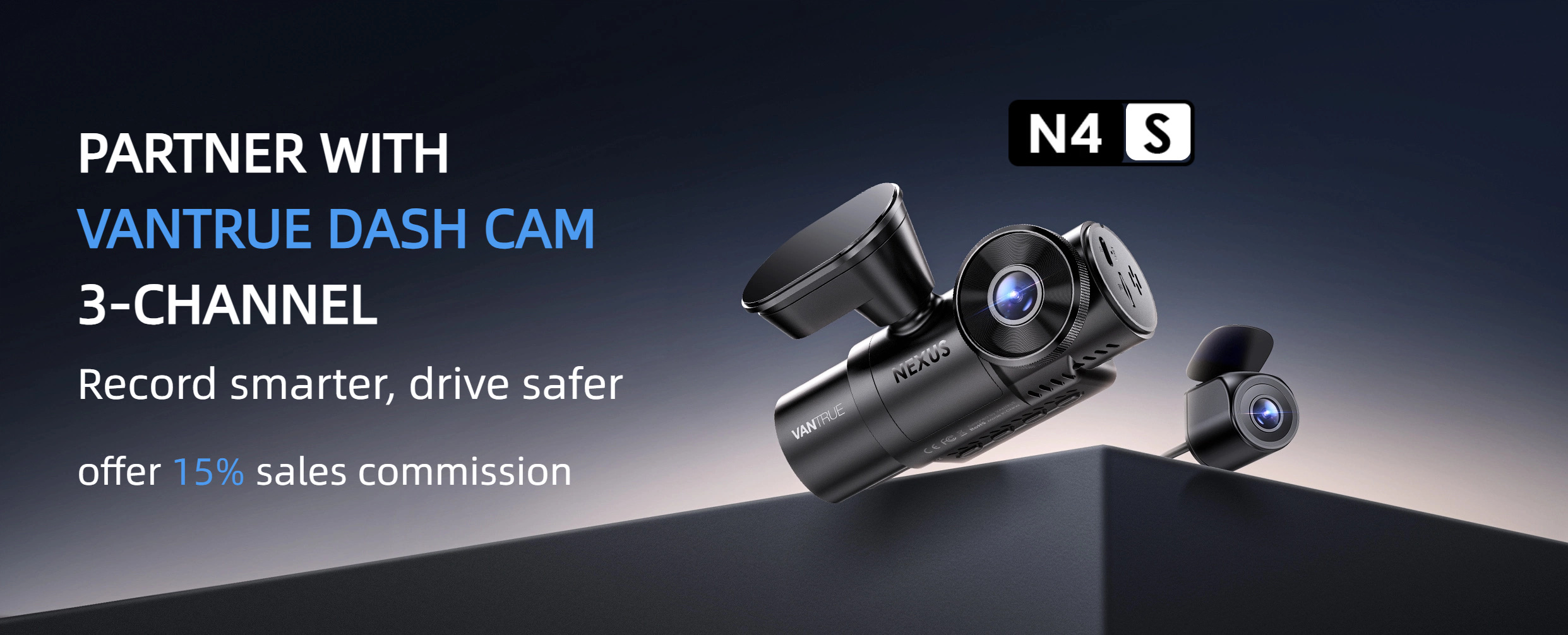
One example in this category is the Vantrue N4 Pro, a three-channel dash cam designed to record the front road, vehicle cabin, and rear view.
This type of setup can make sense for drivers who want broader coverage than a single front camera can provide. It is especially relevant for rideshare drivers, delivery drivers, families, and people who want parking and rear-view context.
Product bundles, accessories, memory card requirements, and pricing can change, so check the current Amazon listing before buying.
For a deeper model-specific breakdown, read our Vantrue N4 Pro review.
If you are comparing Vantrue specifically, start with our Vantrue dash cam buying guide before checking current Amazon models and bundles.
Installation and legal notes for US drivers
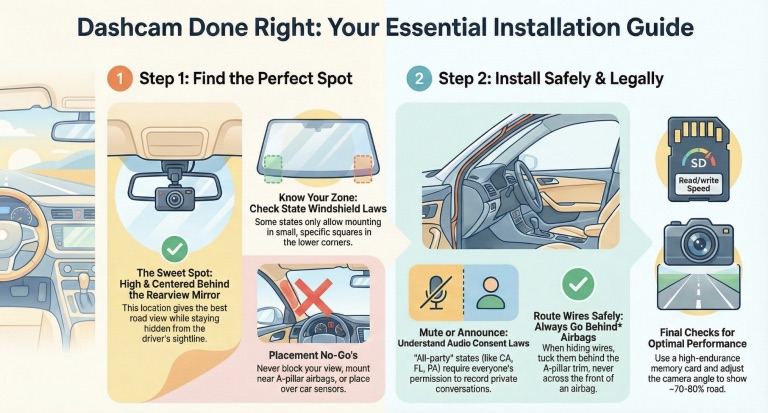
Place the camera where it does not block your view. Check local windshield mounting rules. Route rear camera cables carefully and avoid interfering with airbags. Be careful with cabin audio recording and passenger consent rules. If using parking mode, make sure the power setup will not drain your car battery.
This is general buying guidance, not legal advice. If recording laws are a concern, check the rules in your state.
Before you buy: quick checklist
- Does the front camera record in true 4K?
- Does it include rear camera support?
- Do you need cabin recording?
- Does it support parking mode?
- Does parking mode require a hardwire kit?
- Is it suitable for hot or cold climates where you drive?
- What microSD card type and capacity does it support?
- Does it have Wi-Fi or GPS?
- Can you easily save and download clips?
- What warranty or support is included?
How we would choose
We would prioritize readable footage, reliable recording, heat tolerance, storage stability, and setup simplicity over spec-sheet claims. A good dash cam should quietly record every drive, save important clips when needed, and make it easy to retrieve footage afterward.
For most US drivers, the safest starting point is a reliable 4K front-and-rear dash cam. For rideshare, delivery, family, or cabin-monitoring use, a three-channel setup is worth comparing.
Final verdict
A dash cam is a practical upgrade for US drivers who want a clearer record of what happens on the road and around their vehicle.
If you drive daily, park in busy areas, take road trips, or carry passengers, look for strong 4K front recording, reliable night performance, front and rear coverage, parking mode support, heat resistance, and high-endurance storage.
A three-channel model such as the Vantrue N4 Pro can be a useful example of a broader coverage setup, but the right choice depends on your vehicle, driving habits, parking situation, and installation preferences.